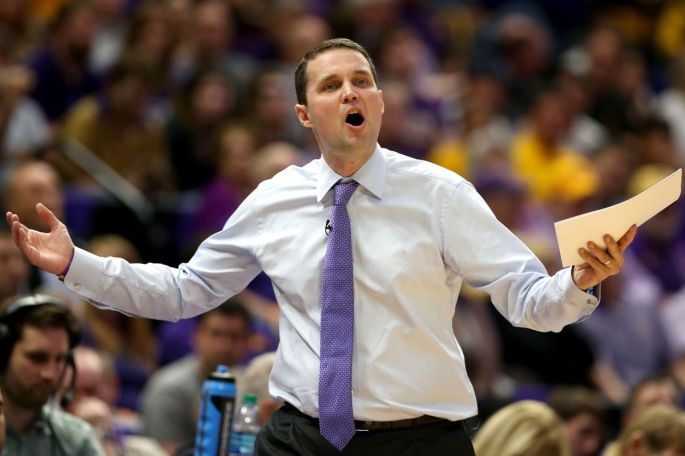
Do you like excitement? Do you like basketball? Do you like exciting basketball? If you like any or all of those three things, I’m not sure Missouri basketball should be your program of choice. Not just currently, but, like, historically. It’s hard to name a less-interesting two-time Elite Eight participant over the last 20 years. The best Missouri team in my lifetime lost to Norfolk State in the Round of 64; just one of the last six Missouri teams has even ranked in the top 100 of KenPom’s offensive efficiency rankings. Not great, Bob.
However, in maintaining my focus away from the current team, it would indeed be fun to talk about said best Missouri team of my lifetime. The 2011-12 Tigers ranked #1 by nearly three full points in offensive efficiency; they played no defense at all, ranking outside of KenPom’s top 100 in defensive efficiency. They were coached by Frank Haith, who by this point is probably more famous for a wide variety of NCAA violations than anything he’s done outside of this one spectacular season. They had a seven-man rotation and no future NBA players of note, though they did provide Tennessee with current assistant Kim English. And let me tell ya: they were the most fun team to watch in America that season alongside Creighton.
It’s one thing to be an elite two-point team; it’s another entirely to be elite from three, too. Missouri did both, and they did it with great fervor. They started 14-0, beat Kansas in an instant classic, lost to Kansas in an instant classic, and then won the Big 12 Conference Tournament with ease over future Elite Eight participant Baylor. I remember Missouri being a popular Final Four pick and being baffled, entirely because they easily had the worst defense of any top-four seed in the Tournament. But who cared? They were insane and stupid and a total blast.
And then came Norfolk State.
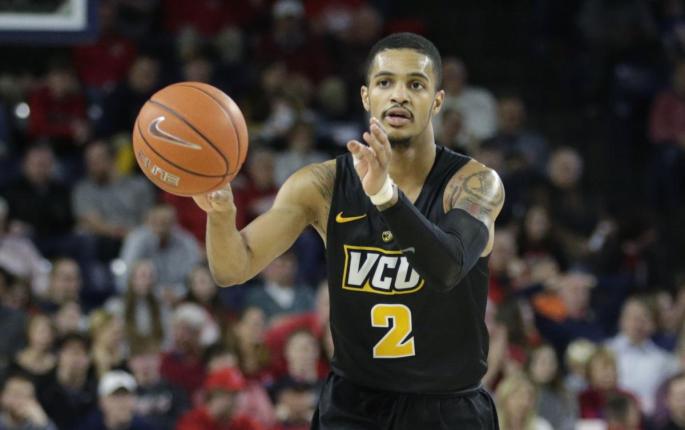
Prior to this exact moment, the 2012 NCAA Tournament had largely sucked. The two upsets on Day One were a very boring 12-over-5 (VCU over Wichita State) and UNLV blowing it to Colorado in an 11-over-6. The best game was probably an upset that didn’t happen, UNC Asheville/Syracuse, which came ultra-close to being the first-ever 16-over-1. Day Two sucked to start, with several unmemorable games. And then, out of absolutely nowhere, came what is now the second-biggest upset in the history of the Tournament. I remember watching this at an Applebee’s, silently rooting for both teams at once, simply because I couldn’t quit the Missouri offense.
As dumb as the Frank Haith era was, I wonder if Mizzou fans would happily run it back, warts and all. Three years of Cuonzo have brought the Tigers a 15-22 SEC record and zero NCAA Tournament wins; at least Haith brought a hilariously good offense. Cuonzo’s teams can’t stop turning it over, ever, and can’t shoot a basketball anymore. This program hasn’t won an NCAA Tournament game since I was a junior in high school, and it feels like it would take a 51-48 barf tornado to win one now.
When my schedule allows this season, I’m pulling back from my Tennessee basketball lens to explore other college basketball programs across America, with a particular focus on those below the Division I level. This is installment #1 of a however-many-parts series about the best college basketball offenses you haven’t heard of yet. This week, we’re traveling up to Rhode Island to check out Synergy’s third-most efficient offense in Division III.
Early in the season, statistics can be a wild game of finding your favorite small-sample oddity. There’s a team making nearly 86% of its free throws? Hello, Pepperdine. The most-efficient Division I offense is…Dayton? Nova Southeastern is shooting a laughable 58% from the field? All of these stats are true, and all of them are incredibly fun. Basketball, in general, should be a fun, watchable sport at all times. It isn’t always that way, with coaches happy to slow the game down to a crawl. (This is partially influenced by watching the team I cover lose a game 51-47 this weekend.)
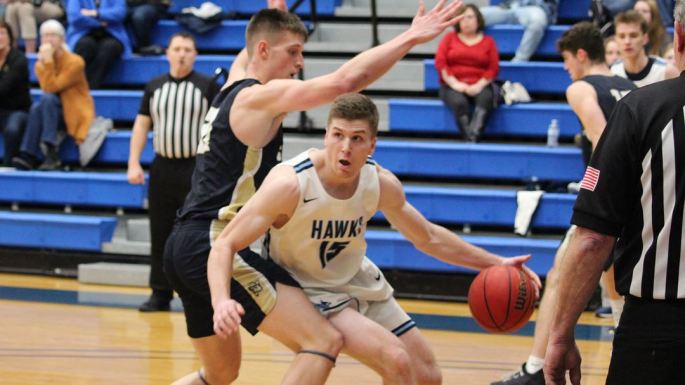
Thankfully, there are schools in lesser-covered pockets of America that remind me why this is the beautiful game. Hearing about their influences – specifically one that I’ve covered already – makes it an even more enjoyable experience. Meet the Roger Williams Hawks, the most fun team by a mile in the Division III Commonwealth Coast Conference:
The Hawks, an always-very-good offense, have shot into the stratosphere in 2019-20. They’re scoring 84 points per game as Synergy’s third-best D-3 offense (19th-best overall, across all levels), making 52.9% of their shots and 41.4% of their threes. They eschew the offensive rebound almost entirely by choice. (Their OREB% of 16.2% would be the fifth-lowest in Division I since 1997.) By the way, they’re doing this in a system that they spent all of six days implementing before the first game started.
Michael Tully, 18-year head coach of the Hawks, explains how this came about. “We just graduated the all-time best player in our school’s history (Austin Coene) who scored 2,200 points. We also graduated three kids the year before him that combined for 5,000 points. I was a little reluctant to go in this direction, but it’s something I’ve been wanting to do,” he tells me in late November. “Six days before our first game, I scrapped what we were doing [on offense] and put this in.”
Tully invited Noah LaRoche to spend time with him over the offseason. LaRoche is responsible for turning St. Joseph (ME) into the best-shooting college basketball offense in 2018-19. The LaRoche System – or whatever you’d prefer to call it – is a 5-out motion that eschews ball screens and leaves the middle open. If you’ve watched much Euroleague, you’ll note the very clear European influences on the offense. It is, perhaps, the very maximum of offensive spacing as a concept. It requires top-tier shot selection to offset potential shot volume concerns.
Luckily for Tully, it’s not far off from what they were already doing in years prior. “We definitely are mindful of keeping the middle of the floor open so we’re not playing with a guy’s back to the basket. That’s been my philosophy for a long time.”
So, how do you turn your own offense up a notch from “pretty good” to “hold the phone?” It starts with a quality push up the court after your opponent’s possession. “Essentially, what we’re trying to do is push the envelope in transition,” notes Tully. “In doing that, we’re trying to get the ball and go and take as much space as we can until it’s not there. Whoever doesn’t have the ball is running into the shape of our offense.” Sometimes this results in a great shot in transition:
Largely, the results have been massively positive. An offense that ranked in the 91st and 93rd-percentiles in Synergy the last two seasons now ranks out as one of the very best in America. May I remind you that large parts of this offense were installed six days before the season opener? As insane as that sounds, Tully offers a reminder that it’s more about small changes than large ones. “I’ve had a lot of this influence for a long time; conceptually, we were probably about 80% of the way there with what we were already doing,” he says.
Basically, Roger Williams has spent several years on the outskirts of Division III basketball. It’s a school of around 4,400 undergraduates, a private liberal arts school in a town of 23,000. Recruiting here, as with most places in Division III, is hard. And yet: Tully’s made it work for a long time. Being in his position of “most successful coach in school history” allows you a lot of leeway with what you’re looking to do on offense.
For coaches attempting to adapt this philosophy, it starts with proper shot selection. You may have a differing opinion on the wave of three-point attempts across college basketball, but Roger Williams has bought all the way in. After taking just 37% of its shots from three in 2017-18, the Hawks have taken more than 48.1% of them from downtown this season. Eight of ten games thus far have resulted in double-digit three-point makes, with the same number of games resulting in 35% or better nights from deep. It’s ridiculously effective:
But it’s also worth noting that no offense, as three-point-loving as they may be, can exclusively take these shots. Tully pointed to a particular early-season game as his example, the one you’re seeing the GIFs from in this article: Coast Guard. “When we played Coast Guard, who is a good team, we were 13-of-18 from three in the first half, which is essentially unheard of,” says Tully. “What really stood out to me is in the second half, they made a conscious effort to take away the threes and we were 2-for-9. A couple of them were tough shots that didn’t go in. In contrast, we were 14-for-17 from inside the line.”
When you have so many driving lines to choose from, it’s almost easy pickings:
Here’s an example of Tully’s team doing similar work in the second half:
“The whole thing is taking what they’re gonna give, and I think that’s what showed up against Coast Guard and in some other games,” Tully says. If, by now, you haven’t seen Coach Daniel (a YouTube channel) break down the St. Joseph offense and everything about it, stop what you’re doing and check this out:
Laughing, Tully sounds quite thankful for the existence of Noah LaRoche and the Monks’ new offense. “It’s literally the same thing we’re doing now,” he says, and I can hear the smile through the phone. If you’re going to copy someone, it’s hard to beat copying the team that shot the ball better than literally everyone else last season. It’s an incredibly hard offense to slow down, because the best-case version of it tells you to either slow down the drives to the rim or the open threes, not both.
For me personally, one of the hardest things to stop are these cuts and rushes through the paint:
Genuinely, if you get beat on these, what are you supposed to you? The continued rushes clear out the paint for a drive to the basket, meaning the on-ball defender has no help behind him. You either foul him before the shot or let him get the easy two. These plays feel like free money:
When I asked Tully what he’d do as an opposing coach to try and slow it down, he says the following with a laugh: “I’m not so sure, because I’m not the one who has to try to do that.” Recently, coaches have come up to Tully before games, complimenting the new-look offense: “One of the things [a recent opponent’s coach] said was “it’s amazing, I look at the stats and everyone on your team is averaging more assists than turnovers.” I didn’t know that, and I don’t know if that’s completely accurate, but I like it.” No word on if he told the coach that this offense had barely a month of implementation by the time they’d played; also no word on if said coach’s jaw then hit the floor.
What’s beautiful to me about this offense is that it promotes nearly everything I love about offense: great spacing, quick ball movement, an up-tempo lifestyle, ideal shot selection, lots of made threes, and lots of easy twos. When you look at it from an objective design standpoint, it’s a very hard offense to beat. So far, Roger Williams is 7-3 this season, concluding its pre-Christmas break schedule with an 80-67 win over Suffolk. Clearly, this team has a bright future; now, it’s up to staff development to see how far they can take it.
Because this offense has had such little time to set in, Tully was appropriately befuddled when I asked what he thought the team’s ceiling was. “When I’m watching us on film, I’m saying ‘hey, we’re doing this, and everybody should’ve been doing this,'” he notes. “We are so far from that point [of reaching our potential]. I think the ceiling is very high, but I’m not sure I can tell you what it is.” Let me be the first to say that I’m extremely excited to see this offense get better game-by-game.
Circa 2003-04, I was really into reading as much as I possibly could about college football and basketball history. If you can imagine this – and I’m sure it’ll shock anyone reading this – I particularly loved rating systems. I was obsessed with the BCS and with its interlocking parts – Sagarin, Billingsley, Howell, et al. For whatever reason, a certain group of schools grabbed my attention in 2004. They were all newcomers to I-A (now FBS) in football, and they were all from Florida.
Obviously, you know the first two by heart now: Florida Atlantic and Florida International. Both are commuter-ish schools near or in Miami that offer degrees of various repute and what might as well be coaching rebuilding programs. In both sports, the following coaches have taken their talents to (sorta close to) South Beach: Lane Kiffin, Butch Davis, Ron Turner (took Illinois to 2001 Sugar Bowl), Isiah Thomas, Mike Jarvis (mid/late-90s CBB guy that took St. John’s to the Elite Eight in 1999), etc. These are places you go to convince others you’re younger than you are.
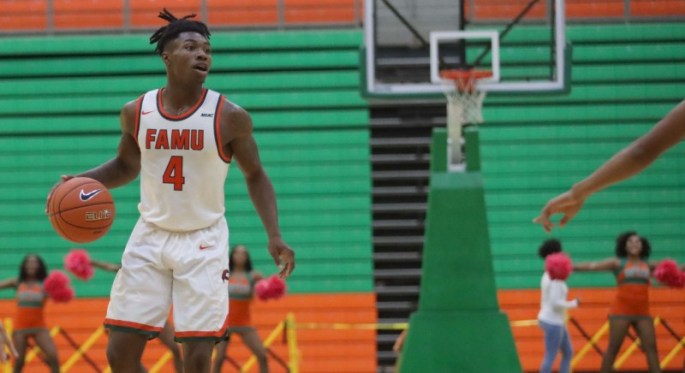
The third of these was a total mystery, and still is: Florida A&M. For one season, and one only, they transitioned up from I-AA to I-A. They have a phenomenal all-time record of 567-274-23 (67%) in football, including six MEAC titles from 1990 to 2001 under head coach Billy Joe. (I implore you to read more about this here, from friend of the show Bill Connelly.) In basketball, I can remember them taking on Kentucky in the first round of the 2004 NCAA Tournament. It would be Kentucky’s last win of that season.
Since that moment in time, Florida A&M serves as a historical oddity: the football program that died on impact in 2004, a basketball program that’s almost done the same, minus a play-in game loss in 2007 to Niagara. Largely, they operate of no consequence to anyone outside of Tallahassee, unless you know about the Marching 100, and I promised myself this wouldn’t be another post about marching bands. They do bring their basketball program to Knoxville this week. Unfortunately, they do not bring the marching band, or much notable history, with them.
If you’d like to jump ahead to a certain page, click below.





 Stats by Will