Program Reviews: The relentless consistency of Vermont basketball

Welcome to Program Reviews, an earlier-than-expected offseason series where I interview coaches across all levels of college basketball about their program, the 2019-20 season, and what’s still to come. Today, Vermont and John Becker.

If you are under the age of, say, 30, it is just about impossible to remember a time where Vermont wasn’t a yearly 20+ game winner and routine postseason fixture. The Catamounts prominently feature in the greatest Gus Johnson call of all time, they’ve won 20+ games 12 seasons in a row (one of seven schools nationally to do this), they’ve finished .500 or better in conference play in 14 straight seasons, and they’ve won the America East regular season title 10 times in the last 19 seasons. It blew me away a little when I realized Vermont had never made the NCAA Tournament in school history until 2003; it simply feels as if they have always been here.

This is the life, and the consistency, of maybe the most unsung consistent program in college basketball. Everyone knows about Gonzaga by now, but there was a time where they were somewhat similarly overlooked. Same with Belmont, same with St. Mary’s, same with Gregg Marshall-era Winthrop, same with Gregg Marshall-era Wichita State. For that one special day in 2005, Vermont seemed like they could break through the barrier and become a household name.

They haven’t had the same breakthrough since, despite four additional NCAA Tournament appearances, but they’ve come pretty darn close. Vermont played 4-seed Purdue hard for a full 40 minutes in 2017 and did the same to 4-seed Florida State in 2019. Had the NCAA Tournament happened this year, they may have been able to get over the hump in Anthony Lamb’s senior year. It’s a shame we’ll never know, but we have a pretty good idea, because betting on the most consistently good mid-major program on the East Coast is a good idea in itself.

John Becker has been the architect of smooth consistency for nine seasons now. It hasn’t always been easy, even when Becker took the Catamounts to the NCAA Tournament in his first season; an 11-5 America East record feels underwhelming for this program. For a while, though, Becker’s had it rolling: a 59-5 record in America East play since 2016-17, 109 wins in the last four seasons, and four straight Top 80 KenPom finishes.

As Becker himself says, mid-major basketball is a world of ebbs and flows; for every Gonzaga, there is a Loyola Chicago or a George Mason, who pops up once and then largely disappears in terms of national recognition. The number of truly year-in, year-out consistent true mid-major programs, at this point, is maybe five or six teams long. And yet: here is Vermont, always operating at the same pace, doing the same things, and staying at the same level of success. I talked to John Becker about this remarkable consistency, how to take the next step forward, and why Anthony Lamb is a special player.

Will Warren: Describe your program philosophy in a few sentences.

John Becker: “I think we’re a defensive-first program. Defense, rebounding, and toughness are kind of year-to-year things we emphasize. From an offensive standpoint, we want to play a motion, ball-screen offense and tweak how flexible we are on that end in terms of adapting to talent. We don’t want to beat ourselves and really force others to beat us by limiting our mistakes. We also want to be a good free throw shooting team. All of those add up to winning basketball, I believe.”

WW: How did you end up going from coaching basketball and tennis at Gallaudet University to working in information systems and then back into coaching?

JB: “It was a very unconventional, serendipitous type of path to being a Division I head coach. I didn’t play at Catholic University; I was a guy that was on the fringes but was friends with guys on the basketball team who ended up getting into coaching. Jimmy Patsos (Siena, Loyola (MD)) and Mike Lonergan (Vermont, George Washington, Catholic University head coach at the time) were guys I was in with. Lonergan later brought me to Vermont after winning a championship at Catholic. I got out of college and got into the computer business, doing data entry and whatnot. After four or five years, I was feeling unfulfilled and thinking there might be something else for me that was a better fit. I had always loved basketball and was a very good high school player. With the help of Jimmy Patsos, I started working some camps and got on at Gallaudet University with his connections.

I coached basketball and tennis, and it’s a deaf/hard-of-hearing school, so I taught myself sign language. It felt like a better fit, but I was working a full-time job at Georgetown at the same time fixing computers on campus at the computer lab. I’d do that from 7 to 3 and then I’d drive across town to Gallaudet and coach from afternoon to night. I got married halfway through my time at Gallaudet and was never able to be at home or see my family. I had to make a decision, so I gave up basketball and went back into the IT field in earnest, right when the tech bubble was in full bloom. I was making a nice living, but again, after a few years, that feeling of unfulfillment and realizing life was short came back. I went back to work at Catholic University, my alma mater, and was an assistant for a couple of years. After those years, Mike called and asked if I wanted to be the operations guy at Vermont. At that point, I decided I’m not gonna have a back-up plan. I’d saved up some money and moved the family up to Burlington.

I did that for a couple years, was an assistant for three more, and then Mike left for George Washington. I was shocked and surprised and humbled to be elevated to the head coach position at Vermont nine seasons ago. I don’t know that I’d recommend it for anyone, but it was my path and it was how it needed to happen. Having a lot of experience outside of basketball and understanding the frustrations of an unfulfilled career, knowing how much that hurts…I think it’s helped me hopefully be a better mentor and leader. I want it to give people hope that there’s more than one way to accomplish things in life.”

WW: For most of my lifetime, Vermont has been one of the most consistent, reliable mid-major programs in college basketball. You’ve elevated the Catamounts beyond their normal range of outcomes to four straight Top 80 KenPom finishes and a stunning 59-5 run in America East play the last two years. What makes Vermont such a special program and enables it to stay this consistent for this long?

JB: “I think about it a lot. The success and the consistency is kind of unheard of at the mid-major level, as you usually ride the ebbs and flows of getting a transcendent player. I inherited a good situation, so to speak. I think we’ve been able, somehow, to continue to get better players that have bought in to how we do things. We have a community here that is all-in on our program. I think when kids get here, they feel like they’re really part of something that’s bigger than them. It really matters here, and Burlington is a beautiful place with a great school. It’s a college town with a unique, cool mid-major basketball program. We don’t have all the facilities and amenities that schools we’re recruiting against have, but we do win and it does matter here. It’s a little harder to get guys to come here, but the ones that do understand it’s not about the bells and whistles but for winning and for being part of something that matters. . . . We’re starting to see the brand and the name recognition with players throughout the country, which is exciting. We want to keep pushing this thing forward and get better and better.”

WW: For most of your tenure and your predecessor’s tenure, Vermont wasn’t much of a three-point-taking team – your players hit the shots, but they were more selective. In the last two seasons, though, the Catamounts broke the previous KenPom-era records for three-point attempt rate. Was this a conscious shift towards the three, and if so, why’d you make that move?

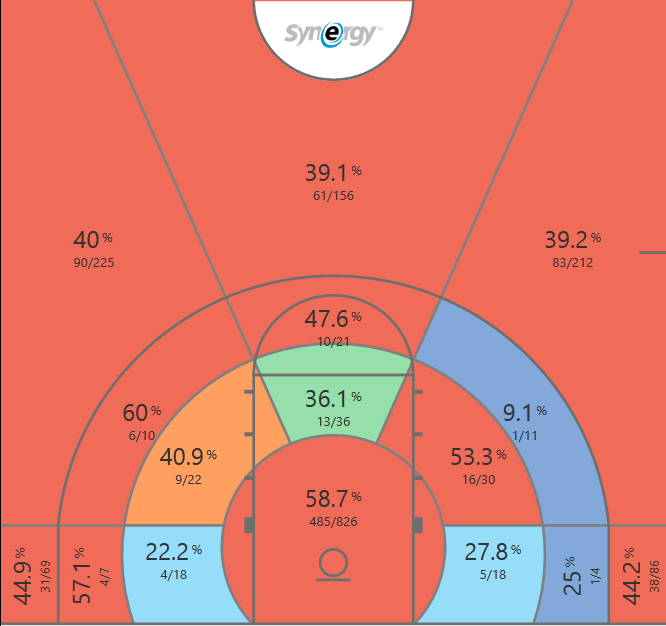
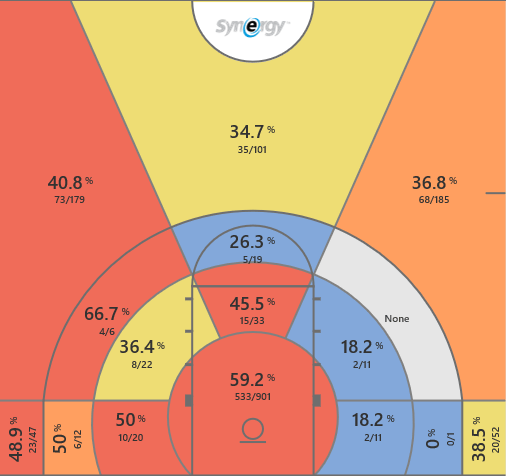
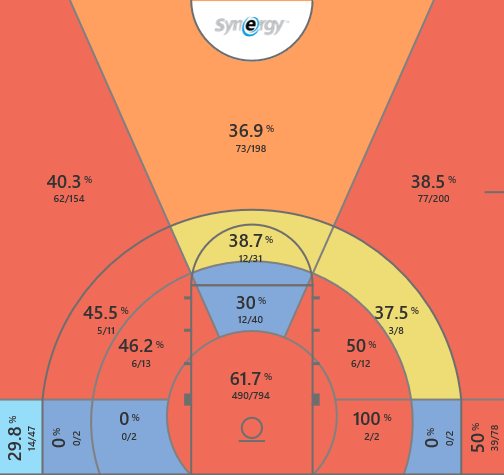
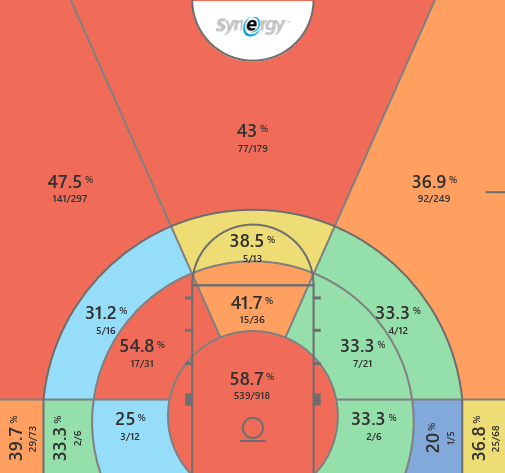
JB: “Offensively, I really believe in balance and playing inside-out and still playing a bit of back-to-the-basket basketball. I’ve really resisted getting caught up in shooting threes every time down the court or trying to get the quickest, fastest shot. I’m not naive to the analytics, though. It’s just something that’s evolved and guys are just better. We’ve had Anthony Lamb, who’s arguably the best player to play at Vermont. He’s dynamic at all three levels, but he really made his hay playing in the paint. What changed is that teams loaded up to him in the post with double and triple teams. The defense slanted to him before he got the ball. It just was the shot we were given was the three. It was hard for us to score in the paint because teams were really collapsing on Anthony. We had some great three-point shooters, so it just seemed like we had to do a lot more of shooting threes to open up Anthony and making teams have to make a decision.”

WW: Anthony Lamb is one of the most widely agreed-upon great mid-major players of the last decade. What set him apart as a player, in your eyes?

JB: “The work ethic, he’s just different. Since the minute he got to campus, he’s in the gym all the time, morning, day, and night. He has a drive to be great and a fear of not being good enough. Obviously, his body type is very interesting – he’s a naturally strong kid in his lower half that allows him to move basically anyone where he wants. He’s only 6’5”, maybe 6’6” on a good day, but he has a 6’11” standing reach, so he’s able to move guys around and able to elevate and finish over people. He also has incredible footwork in the post. He started to develop perimeter skills late in his freshman year. Anything I told him he couldn’t do, he was going to go into the gym and figure out how to do it and become good at it. That’s how he became a good three-point shooter and a great free throw shooter.”

WW: There’s two things I’ve really loved about your defense for the majority of your tenure: you make it really, really hard for opponents to get second chances and you force tough, contested shots both at and away from the rim. Why do you think your program has been consistently excellent in both areas?

JB: “We practice defense probably 60-70% of practice time. We’ve done a great job of holding guys accountable – it doesn’t matter how good you are offensively, you won’t play if you don’t execute our defensive gameplan and our defensive system. Guys have understood the deal, and recruits have it emphasized to them. There’s not much pushback about how you’re gonna get on the court. From a defensive perspective, not only do we practice and drill the fundamentals of it, it’s philosophical. We want to force contested mid-range jump shots. When we coach our guys on what we want to give up, that’s what’s emphasized. That evolves every year a little bit, but for the most part, if a guy from my first year came in and watched a practice today, he’d see a lot of similarities from then to now.”

WW: What’s your favorite win you’ve had as a coach?

JB: “I know by far my favorite loss of all time was the Duke game back in 2014. I don’t have a great memory, so I can’t remember the early ones, but the St. Bonaventure double overtime win was incredible. Senior night with Josh Speidel was incredible. I always remember the championship wins in 2017 and 2019. My very first year, we went to the Tournament and played Lamar in the First Four, who was being coached by Pat Knight at the time. It was a really difficult year for a number of reasons. There was a fire at my house in the middle of the season and I had to move into a condo. We lost five straight early in the year. We went on to win the championship at Stony Brook and I just remember having some incredible wins against Maine and Hartford. Anyway, we played Lamar in Dayton and it might have been as good a game from start to finish as we’d ever played.”

WW: You’ve got a new arena coming in soon, you’ve posted 12 straight 20-win seasons as a program, and you have more wins than all but nine programs over the last four years. What’s the next big step, if any, for Vermont as a program?

JB: “As a coach, we won a First Four game, we’ve been to three NCAA Tournaments in my tenure, and won Coach of the Year four years in a row. All that stuff is incredible and I’m proud of it, but I want to get to the Sweet Sixteen. I think because of the amount we’ve been to the Tournament and because we’ve had good games against teams like St. John’s, Virginia, Kentucky, Purdue, and Florida State, we want more national recognition. If we make the Sweet Sixteen, that would likely happen. In talking to recruits, parents, and transfers, you start to see the power of television and the power of sustained success. We’re able to get better players with those things. I don’t think I’ve made any secret of the fact that I want to see us continue to find the resources and see if we can make this into as big a basketball program as we can make it.”

WW: Last question: what’s your go-to entertainment during the quarantine?

JB: “Ozark and Better Call Saul, I’ve been into quite a bit. My kids watch Mad Men and the Office, so I end up catching an episode or two of those.”

Here’s a highlight package of 15 of my favorite Vermont plays from this past season, both offense and defense.

Program Reviews: North Florida and the Birds of Trey

Program Reviews is an offseason series where the writer and owner of this website interviews college basketball coaches across all levels about their previous season, their program as a whole, and other things. Today’s subject is Matthew Driscoll, head coach of the North Florida Ospreys men’s basketball team, which won a share of the Atlantic Sun regular season title, their third in six seasons.

Generally, any sort of open-ended experimentation in basketball is at least interesting to watch. Whether it works or ends up being efficient is often just icing on the cake. As described to me by Pat McKenzie of St. John’s (MN), many coaches are copycats, which means you don’t often see a ton of originality in college hoops. When something original and unusual does occur, it’s not often that it ends up being as successful as we’d like, which reinforces simply choosing to do the thing that is more likely to work.

I’ve had an appreciation for North Florida for a while simply because they take the three-pointer more seriously on both ends of the court than any other program in Division I. This year, the Ospreys took 52.2% of their shots from downtown – #1 in the nation – and limited opponents to taking just 24.5% of their shots from three, #2 behind Northern Colorado. From 2014-15 onward, every North Florida team has taken at least 41.7% of their shots from three and has allowed opponents to get more than 29% of their field goal attempts from beyond the arc just once. Many programs are able to combine one or the other, but no other Division I program has pushed the extremities of what the three-pointer means on both sides of the ball.

Obviously, as a statistics nerd, this is beyond fascinating to me. It seems like the offensive and defensive endpoints of Moreyball, going as far as UNF forcing opponents to take 38.1% of their shots as non-rim two-pointers, the least-efficient shot in basketball. That’s nice and all, of course. But in a year where teams retreated back inside the arc somewhat thanks to the three-point-line extension, North Florida embraced the three more than ever.

Again, it’s one thing for a team to embrace this strategy. It’s another thing entirely for it to work repeatedly. As their coaches call them, the Birds of Trey made 37.8% of their threes (12th-best), the second-best mark in school history. Only 12 teams posted a better eFG%, and this particular offense finished 31st, UNF’s best offensive mark in their time in D-1. (Getting into unadjusted efficiency can get a little fishy, simply because schedules do matter, but UNF did finish eighth nationally in raw offensive efficiency.) This offense is and has been wildly successful, as North Florida now owns the Atlantic Sun’s two best offenses (2015-16, when they finished 36th) since Belmont’s departure after the 2011-12 season.

Given all of these statistics, I figured you might want to hear from the architect behind it all. Matthew Driscoll is a great resource of offensive concepts and career stories, and we got to discuss both in our Zoom call last week.

The below interview is lightly edited and shortened. At the end of the interview, you can find highlights of some of North Florida’s best plays this season.

WW: Describe your offensive philosophy in a few sentences. (Editor’s note: this ended up being more than a few sentences, but it was a pitch-perfect response about program history and philosophy.)

Matthew Driscoll: “We say all the time in our program that we want makers, not takers. Let me show you something.

Driscoll shows me the game ball from his first career victory. It reads North Florida, 57-46.

MD: “When recruits or current players come in the office and talk to me, they’ll be like, ‘Coach, that’s what we get in a half now.’ When we got into the league, we still had success, but the way in which we went about things, we weren’t like we were now. Belmont, East Tennessee State, and Mercer were all in the league, all really, really good coaches and systems. As I was watching them, I thought Belmont’s different, East Tennessee State’s different, Mercer’s different. All three would recruit to their systems. I thought, man, we gotta do something.

We always had a good three-point shooter – Parker Smith and Beau Beech both were great – and I thought to myself about how I loved the way Belmont and Davidson played. I loved how they spread it and shared it. Then I had to think: who wants to come here, and how can we get those guys, and can we be better going in that direction? When we signed Beau Beech in 2012, he was 6’6”, but he was a guard that could play the stretch forward. He played in what we call our Hybrid position, which is essentially a fourth guard. We knew that getting him would take us in a different direction. At that time, we had to commit to going super, super heavy on three-point shooting. We had forwards that could make a stationary three just good enough – 35-37% – but could also deck it and finish at the rim. Having these hybrids that are 6’7”, 6’8”, 6’9” has helped us find our niche.

The next year, we got Dallas Moore, a scorer that was the first lead guard we ever had who could make threes. Next thing you know, the spacing on the floor was going through the roof. It’s all layups and dunks, wide-open threes. If you ask our guys, they’ll tell you that that’s all we talk about, all the time. . . . We’ve really, really started to recruit specifically [to our system]. Let’s just look for round pegs and keep putting them in round holes.”

WW: Who are your main influences as a coach?

MD: “Coach Rick Barnes, I came in as a JV high school coach from Pennsylvania driving 13 hours with our varsity coach to Providence’s team camp. Subsequently, that helped me meet Coach Larry Shyatt, who is my mentor and took me to his coaching jobs at Wyoming and Clemson. He’s still one of my best friends to this day. Scott Drew is a master at envisioning the future, too.”

WW: You spent 12 years as a Division I assistant before getting your first D-1 head coaching job at UNF. What excited you about coming to North Florida in the first place?

MD: “After we had started to win at Baylor, people are probably thinking ‘Coach D should be able to get a Division I head coaching job.’ 2007, the year before we made the NCAA Tournament, the Robert Morris job opened and I interviewed for it, the one Mike Rice eventually got. The next year, the St. Francis (PA) job opens, and I’m going after this thing hard. This is near Pittsburgh, where I’m from. In my mind, I’m getting this job. I don’t get the job. I’m freaking crushed. I go home, and my wife says, ‘God ain’t ready for you to be a head coach.’

I go back to Baylor, we end up going to the NIT. There was a woman that used to jog with us, and her boyfriend was a volleyball coach at the University of North Florida. I say ‘what’s that?’ She tells me it’s in Jacksonville and it’s beautiful. I went back to the office to look it up and it looked nice. I started looking into the basketball side of it, saw they were in the Division I transition process.

The athletic director at Wyoming the only year I was there became the AD at North Florida. Larry Shyatt, the associate head coach at Florida, decided not to take the UNF job because he wanted to go back to Wyoming. I never even saw the campus. [Athletic director] Coach Moon offered me the job as I’m walking into the pregame meal before we’re playing Penn State for the NIT championship. I took this job, sight unseen, and Coach Shyatt told me ‘don’t worry, you don’t even need to see it.’ I got on the plane and never went home.”

WW: Earlier, I talked about how clearly important the three is to your offense. Your Ospreys took more threes per-possession than any other team in the country this year. However, on the defensive side, only Northern Colorado held a lower rate of opponent three-point attempts. What led you to place this amount of value on the three-pointer on both sides of the ball?

MD: “Because threes beat you. Layups and dunks, protecting the rim, that’s critical. In the last six years, we’ve had three Defensive Players of the Year, all rim protectors. The three is just so significant as a shot – you can be up by eight points and two shots later it’s a two-point game. I thought Gary Williams and Juan Dixon were so, so good at running guys off the perimeter. I’ve always had that in the back of my brain, and we’ve always run people off the line. This year, we averaged 11.8 made threes and 4.8 allowed, that’s +7. That means we’re +21 points to start the game statistically from three.”

WW: I want to ask you about a very specific play in the Liberty game earlier this year.

UNF wins the tip-off directly to a frontcourt player, who swings it to a shooter that immediately drains a three. It takes maybe three seconds and you’re already up 3-0. Where did this come from?

MD: “We lost to Louisville by I don’t know how many a few years back. We did the same thing, won the tip-off, threw it right in front of Pitino’s bench and Trent Mackey buried a three.

Pitino’s postgame press conference was so humbling, because he said so many nice things about us and our system and how much time they had to spend preparing for it. Later that summer, we asked one of his assistants what happened after that play. He turned around and was “mothereffin'” them dudes, cussing at them! We call these plays the game within the game. The opening tip, the first play of the second half, after every timeout, every out-of-bounds play, every special situation, every missed free throw. That’s all the game within the game. It adds up to 20-30 possessions. I got that from Jerry Wainwright in the late 1990s when I was at Clemson.”

WW: Per KenPom.com, this was the highest-rated offense in school history (31st). Why was this particular group so successful offensively, and what set them apart from previous teams?

MD: “This group was able to develop faster because of the groups before making our scheme more simple and less experimental. We have this thing really oiled well with continued talent. We should be tops year in and year out! Don’t forget we played the 22nd-hardest schedule, including three top 10 NET teams that won their respective leagues.”

WW: You’re coming off of what was probably the second-best season in school history and you run one of the most fun, enjoyable offenses in basketball. What’s the next big step for the North Florida program?

MD: “Getting back to the NCAA Tournament and winning a Tournament game. We’ve never done that, and I think that would be huge for us. Winning an Atlantic Sun championship is by far at the top of the list, simply because of what we have to do in non-conference. We’ve got to bring in so much money [for the program] that we have six or seven built-in losses before we even play. We’ve beat Purdue once, we beat Illinois once, but those are few and far between.”

WW: What’s something people don’t know about North Florida as a university?

MD: “What people don’t realize is we’re eight miles from the Atlantic Ocean. We’re eight miles from downtown Jacksonville, which has an NFL team. We’ve got a $5M mall outside our front door. Our school is sitting on 1,300 acres. Plus, we have a lazy river. It’s about as well-kept a secret as you could possibly imagine. Once you get kids here, it’s simple. It’s more about getting them here in the first place. We’re six hours from Atlanta, six hours from Miami, six hours from Charlotte. It’s a unique, unique place.”

WW: Last question: what’s your go-to entertainment, if anything, during the quarantine?

MD: “My wife and son and I watched Knives Out. We also watched the whole Tiger King…scenario. I was disappointed in the exploitation and how they didn’t pay the workers. I told my wife and our staff I didn’t watch it anymore, but my wife got me to watch one more episode and the next one was “did she kill her husband or not.” That was deep! They got me back in. Anyway, I wouldn’t say it was my choice – General Hospital is more important to me than that. My wife and I watch it every night. I just got done watching McMillions and turned my whole staff onto it.”

Here’s 15 of my favorite UNF plays from the games I watched:

E.J. Anosike brings more than just rebounding to Tennessee

A light in the sports wilderness! Finally!

Obviously, I’m quite thrilled to be talking about an actual real basketball event of any sort. Plus, this one figures to go better than my last preview of a transfer, who was a guy that didn’t even end up at Tennessee. E.J. Anosike has a ton to offer a Tennessee team that will be almost perfectly split between freshmen and old hands: a newcoming old hand that brings sorely-needed rebounding skills to the worst defensive rebounding squad in the SEC.

Beyond that, there’s more to Anosike than his admittedly great rebounding skills. You don’t get to be #6 on ESPN’s Top Graduate Transfers list exclusively by rebounding, and you don’t get to be an important piece of an SEC squad with just one skill. Anosike can score, can shoot, and likely enters as a seriously useful bench piece for a Tennessee team in desperate need of useful bench pieces. (In case you’ve happily forgotten, Tennessee went with a six-man rotation in the final four games of the year and just about stopped playing all of the freshmen + Uros Plavsic entirely.)

The goal with this piece is in two parts:

  1. Figure out what E.J. Anosike’s skills and limitations are;
  2. Also figure out the best ways Tennessee can emphasize the good parts and hide the less-good ones.

As such: consider this a Show Me My Opponent where the opponent is actually your new pal E.J.

WHAT E.J. ANOSIKE BRINGS

Solid, useful post skills

The data for Anosike against high-end competition is obviously going to be limited; Sacred Heart’s home of the Northeast Conference hasn’t won a single first-round NCAA Tournament game and the conference itself ranks 27th of 32nd on KenPom. So, yeah, the Pioneers of Sacred Heart didn’t get to play Kentucky and Florida three times in a season. Per KenPom, Anosike got to play against six Tier A (Quadrant 1 equivalent) opponents in his three-year career, with an additional five games against Tier B (Quadrant 2 equivalent).

The Tier A stats aren’t perfect – 11-for-26 from two, two 4+ foul games, three double-digit losses – but Anosike himself seemed to handle the spotlight fairly well. In Sacred Heart’s two Tier A games in 2019-20, Anosike got as many free throw attempts (18) as he did shot attempts, which is pretty remarkable.

Anosike wasn’t quite as dominant on the boards as he was against lesser competition, but getting five offensive rebounds against Providence is something that…well, nobody on Tennessee would’ve done this past season. His Tier B stats were better: 15.5 PPG, 9 RPG, and a 55.6% hit rate from two. In particular, he had a lot of success inside the perimeter against Tier B opponent UCF, going 6-for-9:

I can’t tell you for certain what Tennessee’s schedule will look like in 2020-21, but you can pretty much know Anosike will face tougher competition than ever before. Tennessee played 19 Tier A + B opponents in 2019-20 and 20 in 2018-19; Anosike must rise his own game to match the competition. That said: Tennessee will likely play half or slightly under half of its schedule against the competition level that Anosike demolished at Sacred Heart.

Potential to be unlocked as a shooter; hits shots off the dribble pretty well

The headline sums it up fairly well, but I want to talk about sample sizes. E.J. Anosike attempted 403 free throws at Sacred Heart; he attempted 136 threes, with all but five of them coming after his freshman year. In his sophomore year, Anosike made 36.5% of his 52 attempts; in his junior year, 25.3% of 79. Here’s my two points:

  • We almost certainly know much more about Anosike’s free throw shooting than we do his three-point shooting;
  • We can then say that Anosike’s truth lies somewhere between the two extremes of his sophomore and junior years.

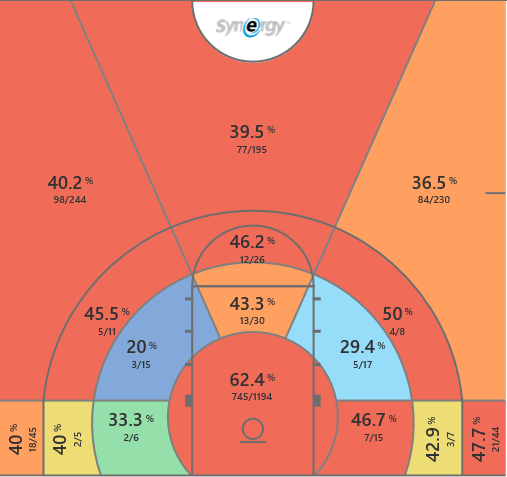
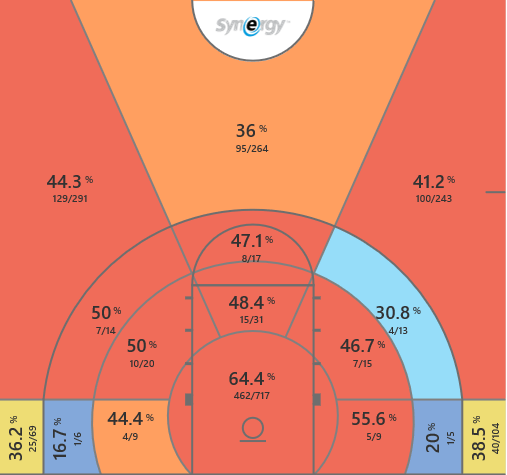
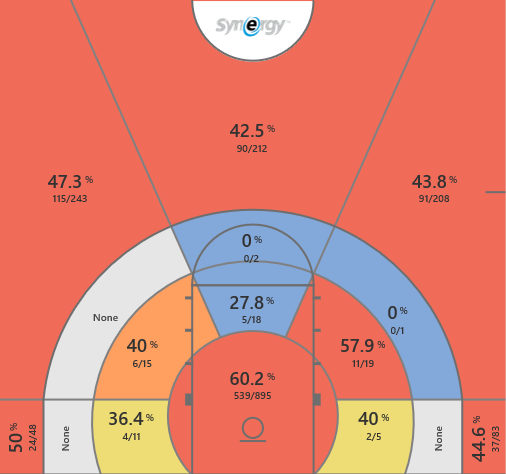
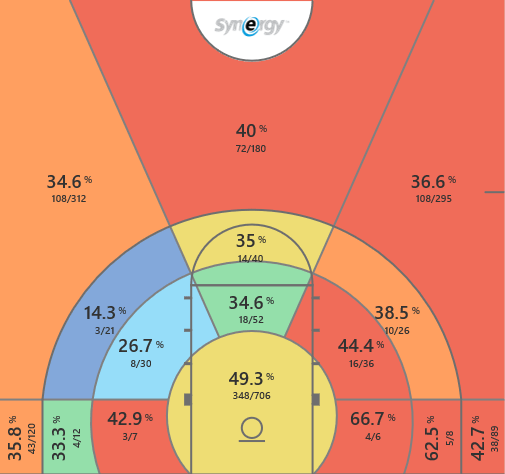
Anosike got open frequently in Sacred Heart’s offense, and I find it hard to think that he wouldn’t get open more often in a Tennessee offense that has Santiago Vescovi, Jaden Springer, and Josiah-Jordan James at the very least. Anosike’s Synergy splits are quite bizarre; he’s actually a pretty good shooter when at least somewhat guarded.

However: he became one of the worst shooters in his conference when left open.

As usual, my guess is a combination of small sample size + statistical anomaly. It’s meaningless, mostly. What’s more meaningful is this: in 2019-20, players who made between 70-75% of their free throws – as Anosike has done every season of his career – averaged a 34% hit rate from three. The middle two-thirds of the sample ranged everywhere from 30-38%. Considering Anosike was at the extreme bottom end based on a 79-shot sample but was above the average one year before, it’s reasonable to think he can hit that 30-38% range from three. That gives Tennessee something they didn’t have off the bench, and it makes him especially valuable in small-ball lineups.

Oh yeah, and his off-the-dribble pull-ups look good to me. I would prefer that he either takes one more dribble towards the basket or just takes the three, but if he’s comfortable from 17+ feet and hits at the rate we’re looking for on mid-range attempts (40% or higher), then you can’t really discourage that as a coach.

A more versatile P&R piece than Tennessee’s had in some time

With an important qualifier, that is. Yves Pons did a solid job when called upon as the roll half of a pick-and-roll, and popped out for wide-open threes about once every couple of games. I wish Tennessee had run that more, but I’ve also wished they’d use more ball-screen actions for most of the last three years. Anosike offered a very diverse split of rolls, pops, and slips at Sacred Heart, and it’s not really something that anyone at Tennessee has done to date.

He’s unafraid to drive to the basket from the perimeter:

And he’s good at finishing off of more traditional looks:

How much Anosike plays is heavily dependent on Yves Pons staying/not staying for 2020-21, but if Pons does stay, you’re looking at a guy who can realistically give you 15 minutes a night of diverse offensive action and high-end rebounding.

Oh yeah, and the rebounding

It is really good. Pound-for-pound, Anosike is likely the best non-6’10″+ rebounder Tennessee has had since Jeronne Maymon or even Jarnell Stokes. This appears simple, but Anosike anticipates his own misses very well:

And I admire that Anosike is really smart as a rebounder, in that his first instinct isn’t always to go straight back up. I love how he finds an open man here:

Even in a bench role, this is a type of player that can frustrate Tennessee opponents into some bad fouls. Six different times last season, he attempted 10+ free throws; Tennessee as a team did that eight times all season, and half of those were John Fulkerson in the final month of the season. If opponents hated how many fouls Fulkerson drew down the stretch of SEC play, the potential is there for Anosike to draw a lot of ire from those that run sports radio stations in the state of Kentucky.

On-ball defense needs work

To be frank, Anosike’s got a lot to do on the defensive side. The advanced metrics aren’t impressed with his defense, giving him a below-average Box-Plus Minus all three years at SHU. (This could be a team-wide issue, of course, as SHU was terrible defensively. That said, Anosike only graded out as the third-best defender among SHU’s regular starters and fourth-best out of the rotation as a whole.) In particular, he’s struggled to keep up with shooters on the perimeter:

And Synergy has him as a rather paltry isolation defender.

Of course, Tennessee can limit this damage by putting Anosike on larger guys that aren’t good shooters, i.e. 70% of the SEC’s starting centers. He doesn’t lose many rebounding battles, so you don’t have to worry about the height difference. That also leads into his main positive as a defender.

Good, solid post defender

Synergy rates out Anosike as being very good in the post across all games, which makes sense. His skill set represents that of an undersized 4 by height only; it is worth noting that Anosike is 245 pounds and appears well-built. He’s held his own against the best competition SHU faced, along with everyone else.

Tennessee can use these skills against the stiffs of the schedule, as I mentioned, as well as against basically any PF/C in Quadrants 3 & 4. I don’t think anyone is currently anticipating Anosike to start; we are all generally anticipating him to be a useful, good piece from the bench when Tennessee needs him to be.

Various other skills

These are more flashes than anything of serious consistency, but they’re worth noting nonetheless. At times, Anosike shows active hands, and perhaps with better defensive coaching, he’ll do it more often.

Synergy says Anosike got much better at pick-and-roll defense from 2018-19 to 2019-20, and the video looks to back it up. In 2018-19 he struggled to make decisions fast enough; in 2019-20, he appeared more decisive and better at forcing tough shots:

More of that and Tennessee has a quality defensive piece in some specialized spots. Also, you don’t need any video to be reminded of his excellent rebounding capabilities.

HOW TENNESSEE USES HIM

Uh…exactly where you think? By height, Anosike would theoretically be locked in at the 4 or even the 3. However, Anosike didn’t play the 3 at all at Sacred Heart, and it’s hard to rationalize playing a guy at the 3 that you hope can get to 34% or thereabouts from three. Anosike will be at the 4, and I think he’d be a really good fit as a super-small-ball 5.

Imagine the following lineup whenever Fulkerson needs rest:

  • PG: Vescovi or Bailey
  • SG: Keon Johnson
  • SF: Springer (or JJJ)
  • PF: Pons
  • C: Anosike

Is that a small lineup? Sure…in theory. Johnson is 6’4″ and Springer 6’5″, so you’re not going all that small. Anyway, look at that lineup. It contains a point guard (either one!) that’s comfortable out to 30 feet, two hyper-athletic wings, the reigning SEC Defensive Player of the Year, and an elite rebounder that is willing to shoot threes. All five players can and will shoot, and that’s not something Tennessee has offered in my lifetime.

Even so, Anosike at the 4 is worthy of thinking about happily, too. I think he and Fulkerson can play at the same time in a way I absolutely never thought Nkamhoua and Fulkerson or Plavsic and Fulkerson could. Plus, I’m not totally out on the idea of playing Anosike with one of Nkamhoua/Plavsic as a second-string lineup, but that’s mostly because it’s not a lineup with both of those players at the same time.

Anyway, this is a nice addition to a Tennessee team that I think pretty much everyone has in their 2020-21 top 15-20. Could they end up better than that? Of course, and having depth pieces like this is how you ensure a higher floor in March.

The best offenses in women’s college basketball, 2019-20

This is the same basic idea as my post on the 25 best offenses in men’s college basketball, but just using the Synergy Sports numbers. I didn’t have as much time as I’d like to knock this one out, and I’d like to move on to profiling defenses later this week before spending another two days on offensive success.

Below is each team’s shot chart, their best play types, shooting splits, and tempo, which is calculated via Ken Pomeroy’s equation listed here.

25. Hawaii Pacific Sharks (Honolulu, HI): 0.936 PPP

  • Best Play Types (90th-percentile or higher): Off-Screen (99th-percentile); Transition (94th)
  • Percentage of Shots Attempted: 36.6% Rim, 23.2% Non-Rim Twos, 40.2% Threes
  • Shots Made by Category: 55.4% Rim, 35.7% Non-Rim Twos, 36% 3PT
  • Tempo: 75.34 possessions (would rank #7 of 353 among D-1 men’s offenses, per KenPom)

24. Drake Bulldogs (Des Moines, IA): 0.936 PPP

  • Best Play Types (90th-percentile or higher): Cuts (99th), Post-Up (97th), Off-Screen (97th), Spot-Up (91st)
  • Percentage of Shots Attempted: 42.7% Rim, 17.5% Non-Rim Twos, 39.8% Threes
  • Shots Made by Category: 64.4% Rim, 38.6% Non-Rim Twos, 33.4% 3PT
  • Tempo: 76.57 possessions (#3 of 353)

23. Our Lady of the Lake Saints (San Antonio, TX): 0.938 PPP

  • Best Play Types (90th-percentile or higher): Transition (97th), Spot-Up (90th)
  • Percentage of Shots Attempted: 42.4% Rim, 27.7% Non-Rim Twos, 29.9% Threes
  • Shots Made by Category: 57.5% Rim, 37.8% Non-Rim, 33.8% 3PT
  • Tempo: 88.79 possessions (#1 of 353)

22. Drury Panthers (Springfield, MO): 0.938 PPP

  • Best Play Types (90th-percentile or higher): P&R Ball Handler (96th), Transition (93rd)
  • Percentage of Shots Attempted: 42.6% Rim, 25.9% Non-Rim Twos, 31.5% Threes
  • Shots Made by Category: 60.1% Rim, 38.8% Non-Rim Twos, 36.7% 3PT
  • Tempo: 80.46 possessions (#1 of 353)

21. UAB Blazers (Birmingham, AL): 0.939 PPP

  • Best Play Types (90th-percentile or higher): Spot-Up (100th), Cuts (98th), P&R Ball Handler (97th)
  • Percentage of Shots Attempted: 34.9% Rim, 24.4% Non-Rim Twos, 40.7% Threes
  • Shots Made by Category: 61.7% Rim, 32.9% Non-Rim Twos, 37.7% 3PT
  • Tempo: 69.97 possessions (#121 of 353)

20. Union Bulldogs (Jackson, TN): 0.94 PPP

  • Best Play Types (90th-percentile or higher): Spot-Up (99th), P&R Ball Handler (99th), Transition (98th)
  • Percentage of Shots Attempted: 41.5% Rim, 28% Non-Rim Twos, 30.5% Threes
  • Shots Made by Category: 56.4% Rim, 43.6% Non-Rim Twos, 40.3% 3PT
  • Tempo: 74.01 possessions (#19 of 353)

19. Marist Red Foxes (Poughkeepsie, NY): 0.941 PPP

  • Best Play Types (90th-percentile or higher): Cuts (99th), Spot-Up (94th), Transition (90th)
  • Percentage of Shots Attempted: 34.8% Rim, 28.1% Non-Rim Twos, 37.1% Threes
  • Shots Made by Category: 63.3% Rim, 44% Non-Rim Twos, 35.9% 3PT
  • Tempo: 68.46 possessions (#217 of 353)

18. Nebraska-Kearney Lopers (Kearney, NE): 0.942 PPP

  • Best Play Types (90th-percentile or higher): Cuts (98th), Spot-Up (97th), Post-Up (90th)
  • Percentage of Shots Attempted: 45% Rim, 16.6% Non-Rim Twos, 38.4% Threes
  • Shots Made by Category: 59.2% Rim, 38% Non-Rim Twos, 34.5% 3PT
  • Tempo: 70.76 possessions (#84 of 353)

17. Southeastern Fire (Lakeland, FL): 0.945 PPP

  • Best Play Types (90th-percentile or higher): Post-Up (99th), Spot-Up (97th), Cuts (96th), Transition (90th)
  • Percentage of Shots Attempted: 53.9% Rim, 14.3% Non-Rim Twos, 31.8% Threes
  • Shots Made by Category: 60.9% Rim, 40.5% Non-Rim Twos, 34.7% 3PT
  • Tempo: 77.34 possessions (#3 of 353)

16. Connecticut Huskies (Mansfield, CT): 0.946 PPP

  • Best Play Types (90th-percentile or higher): Transition (99th), Spot-Up (96th), Post-Up (93rd)
  • Percentage of Shots Attempted: 38.4% Rim, 26.5% Non-Rim Twos, 35.1% Threes
  • Shots Made by Category: 61.5% Rim, 38.5% Non-Rim Twos, 39.4% 3PT
  • Tempo: 70.7 possessions (#86 of 353)

15. Baylor Lady Bears (Waco, TX): 0.947 PPP

  • Best Play Types (90th-percentile or higher): Spot-Up (99th), Post-Up (98th), Transition (97th), Cuts (96th)
  • Percentage of Shots Attempted: 47.3% Rim, 34.8% Non-Rim Twos, 17.9% Threes
  • Shots Made by Category: 59.8% Rim, 42.1% Non-Rim Twos, 37.9% 3PT
  • Tempo: 73.57 possessions (#25 of 353)

14. Florida Gulf Coast Eagles (Fort Myers, FL): 0.948 PPP

  • Best Play Types (90th-percentile or higher): Spot-Up (97th), Transition (96th)
  • Percentage of Shots Attempted: 36.9% Rim, 9% Non-Rim Twos, 54.1% Threes
  • Shots Made by Category: 56.1% Rim, 35.4% Non-Rim Twos, 33.7% 3PT
  • Tempo: 73.32 possessions (#27 of 353)

13. Westmont Warriors (Santa Barbara, CA): 0.954 PPP

  • Best Play Types (90th-percentile or higher): Transition (100th), P&R Ball Handler (99th), Spot-Up (98th)
  • Percentage of Shots Attempted: 30.6% Rim, 18.1% Non-Rim Twos, 51.3% Threes
  • Shots Made by Category: 51.4% Rim, 39.3% Non-Rim Twos, 37% 3PT
  • Tempo: 65.5 possessions (#329 of 353)

12. Iowa Hawkeyes (Iowa City, IA): 0.954 PPP

  • Best Play Types (90th-percentile or higher): Post-Up (100th), Spot-Up (95th), Transition (95th), Cuts (91st)
  • Percentage of Shots Attempted: 40.5% Rim, 22.5% Non-Rim Twos, 37% Threes
  • Shots Made by Category: 63.3% Rim, 40.1% Non-Rim Twos, 36.5% 3PT
  • Tempo: 74.27 possessions (#13 of 353)

11. Indiana Tech Warriors (Fort Wayne, IN): 0.963 PPP

  • Best Play Types (90th-percentile or higher): Cuts (99th), Spot-Up (98th), Transition (98th)
  • Percentage of Shots Attempted: 46.2% Rim, 17% Non-Rim Twos, 36.8% Threes
  • Shots Made by Category: 61.4% Rim, 33.2% Non-Rim Twos, 36.5% 3PT
  • Tempo: 73.35 possessions (#25 of 353)

10. Bryan College Lions (Dayton, TN): 0.965 PPP

  • Best Play Types (90th-percentile or higher): Spot-Up (100th), Cuts (100th), P&R Ball Handler (93rd)
  • Percentage of Shots Attempted: 45.2% Rim, 11.2% Non-Rim Twos, 43.6% Threes
  • Shots Made by Category: 55.3% Rim, 37.8% Non-Rim Twos, 37.1% 3PT
  • Tempo: 78.29 possessions (#2 of 353)

9. Abilene Christian Wildcats (Abilene, TX): 0.969 PPP

  • Best Play Types (90th-percentile or higher): Cuts (100th), Spot-Up (99th), P&R Ball Handler (99th), Post-Up (99th), Transition (96th)
  • Percentage of Shots Attempted: 47% Rim, 6.8% Non-Rim Twos, 46.2% Threes
  • Shots Made by Category: 59.3% Rim, 37.5% Non-Rim Twos, 38% 3PT
  • Tempo: 71.59 possessions (#58 of 353)

8. Arkansas Razorbacks (Fayetteville, AR): 0.976 PPP

  • Best Play Types (90th-percentile or higher): Transition (100th), P&R Ball Handler (95th), Spot-Up (94th)
  • Percentage of Shots Attempted: 37.2% Rim, 23.5% Non-Rim Twos, 39.3% Threes
  • Shots Made by Category: 54.8% Rim, 37.5% Non-Rim Twos, 38% 3PT
  • Tempo: 76.08 possessions (#4 of 353)

7. Wartburg Knights (Waverly, IA): 0.978 PPP

  • Best Play Types (90th-percentile or higher): Spot-Up (100th), Transition (100th), Cuts (100th), Post-Up (96th)
  • Percentage of Shots Attempted: 45.3% Rim, 7.3% Non-Rim Twos, 47.4% Threes
  • Shots Made by Category: 62.4% Rim, 40% Non-Rim Twos, 35.8% 3PT
  • Tempo: 73.61 possessions (#24 of 353)

6. South Dakota Coyotes (Vermillion, SD): 0.98 PPP

  • Best Play Types (90th-percentile or higher): Spot-Up (99th), Cuts (98th), Transition (97th), Post-Up (97th), P&R Ball Handler (97th)
  • Percentage of Shots Attempted: 40.3% Rim, 25.7% Non-Rim Twos, 34% Threes
  • Shots Made by Category: 61.1% Rim, 38.8% Non-Rim Twos, 37.7% 3PT
  • Tempo: 71.3 possessions (#65 possessions)

5. Glenville State Pioneers (Glenville, WV): 0.982 PPP

  • Best Play Types (90th-percentile or higher): P&R Ball Handler (100th), Spot-Up (99th), Transition (92nd)
  • Percentage of Shots Attempted: 37.9% Rim, 21.3% Non-Rim Twos, 40.8% Threes
  • Shots Made by Category: 62.7% Rim, 39.2% Non-Rim Twos, 35.2% 3PT
  • Tempo: 89.41 possessions (#1 of 353)

4. Taylor University Trojans (Upland, IN): 0.983 PPP

  • Best Play Types (90th-percentile or higher): Spot-Up (100th), Transition (100th), Cuts (93rd)
  • Percentage of Shots Attempted: 36% Rim, 13.3% Non-Rim Twos, 50.7% Threes
  • Shots Made by Category: 55% Rim, 36.8% Non-Rim Twos, 40.7% 3PT
  • Tempo: 69.04 possessions (#177 of 353)

3. Walsh Cavaliers (North Canton, OH): 0.984 PPP

  • Best Play Types (90th-percentile or higher): Spot-Up (98th), Transition (98th)
  • Percentage of Shots Attempted: 46.4% Rim, 24.9% Non-Rim Twos, 28.5% Threes
  • Shots Made by Category: 60.7% Rim, 40.9% Non-Rim Twos, 38% 3PT
  • Tempo: 76.25 possessions (#3 of 353)

2. Ashland Eagles (Ashland, OH): 1.045 PPP

  • Best Play Types (90th-percentile or higher): Everything but Post-Up (89th) and P&R Roll Man (70th)
  • Percentage of Shots Attempted: 46.2% Rim, 21.8% Non-Rim Twos, 32% Threes
  • Shots Made by Category: 61.8% Rim, 44.5% Non-Rim Twos, 46.2% 3PT
  • Tempo: 75.37 possessions (#7 of 353)

1. Oregon Ducks (Eugene, OR): 1.054 PPP

  • Best Play Types (90th-percentile or higher): Every single play type not named Hand-Off (61st). Of the 11 play types offered, Oregon ranked in the 98th-percentile or higher in ten.
  • Percentage of Shots Attempted: 37% Rim, 25.1% Non-Rim Twos, 37.9% Threes
  • Shots Made by Category: 66.1% Rim, 45.7% Non-Rim Twos, 38.7% 3PT
  • Tempo: 69.52 possessions (#145 of 353)

If you’d like to see more of this, tag me on Twitter @statsbywill or email me statsbywill@gmail.com.

The best offenses in men’s college basketball, 2019-20

Last year, a couple of weeks after the college basketball season, I made my deep exploration into the best men’s college basketball offenses in 2018-19. It led to a full summer of exploring these offenses in greater detail, complete with interviews with coaches and a whole lot of GIFs and game-watching. I loved doing it; it only makes sense that I would do it again.

This year, I decided to expand the, uh, “search” to the top 25 across all levels. Why? Well, why not. SO: here are the very best college basketball offenses of the last five months. I’m doing this in a few different ways than usual. This particular ranking is from Synergy Sports. However, for last year’s KenPom-style ratings, I’ll include that top 25 on the next page, along with the top 25 half-court offenses. It just felt fair to pay tribute to the service that works for all levels of college basketball.

Per Synergy Sports, here were the 25 best offenses of the 2019-20 men’s college basketball season. Below is each team’s shot chart, their best play types, shooting splits, and tempo, which is calculated via Ken Pomeroy’s equation on the next page.

25. Briar Cliff Chargers (Sioux City, IA)

  • Points Per Possession: 1.036
  • Best Play Types (90th-percentile or higher): P&R Ball Handler (99th-percentile); Spot-Up (97th-percentile); P&R Roll Man (96th-percentile); ranked in 100th-percentile on P&R as a whole
  • Percentage of Shots Attempted: 39% Rim (any attempt within 4 feet of the rim), 12% Non-Rim Twos, 49% Threes
  • Shots Made by Category: 61.6% Rim, 38.5% Non-Rim Twos, 39.2% 3PT
  • Tempo: 70.22 possessions (would have ranked 114th of 353 in D-1)

24. Yeshiva Maccabees (New York, NY)

  • Points Per Possession: 1.037
  • Best Play Types: Spot-Up (99th), Transition (98th)
  • Percentage of Shots Attempted: 45.9% Rim, 16% Non-Rim Twos, 38.1% Threes
  • Shots Made by Category: 65.1% Rim, 46% Non-Rim Twos, 39.6% 3PT
  • Tempo: 78.07 possessions (2nd of 353)

23. Brigham Young Cougars (Provo, UT)

  • Points Per Possession: 1.039
  • Best Play Types: Spot-Up (99th), P&R Roll Man (99th), P&R Ball Handler (97th), Post-Up (92nd), 99th-percentile on P&R as a whole
  • Percentage of Shots Attempted: 26% Rim, 32.5% Non-Rim Twos, 41.5% Threes
  • Shots Made by Category: 69.4% Rim, 44.4% Non-Rim Twos, 42.2% 3PT
  • Tempo: 69.7 possessions (133rd of 353)

22. Western Oregon Wolves (Monmouth, OR)

  • Points Per Possession: 1.04
  • Best Play Types: Spot-Up (99th), Post-Up (93rd)
  • Percentage of Shots Attempted: 39.5% Rim, 17.9% Non-Rim Twos, 42.7% Threes
  • Shots Made by Category: 62.2% Rim, 39.5% Non-Rim Twos, 40.5% 3PT
  • Tempo: 75.33 possessions (7th of 353)

21. Walsh Cavaliers (North Canton, OH)

  • Points Per Possession: 1.041
  • Best Play Types: Transition (97th), P&R Ball Handler (97th), Spot-Up (96th), Isolation (93rd), 95th-percentile P&Rs
  • Percentage of Shots Attempted: 36.8% Rim, 19% Non-Rim Twos, 44.2% Threes
  • Shots Made by Category: 61.3% Rim, 41.9% Non-Rim Twos, 41.3% 3PT
  • Tempo: 70.35 possessions (111th of 353)

20. Gonzaga Bulldogs (Spokane, WA)

  • Points Per Possession: 1.041
  • Best Play Types: Post-Up (98th), P&R Ball Handler (97th), P&R Roll Man (97th), Spot-Up (93rd), 100th-percentile P&Rs, 96th-percentile post-ups
  • Percentage of Shots Attempted: 46.1% Rim, 22.6% Non-Rim Twos, 31.3% Threes
  • Shots Made by Category: 65.2% Rim, 41.3% Non-Rim Twos, 38.6% 3PT
  • Tempo: 72.6 possessions (36th of 353)

19. Dayton Flyers (Dayton, OH)

  • Points Per Possession: 1.041
  • Best Play Types: Cuts (99th), Spot-Up (97th), Transition (97th), 98th-percentile P&R
  • Percentage of Shots Attempted: 40.5% Rim, 20.5% Non-Rim, 39% Threes
  • Shots Made by Category: 71.5% Rim, 44.1% Non-Rim, 37.1% Threes
  • Tempo: 68.0 possessions (233rd of 353)

18. St. John’s Johnnies (St. Joseph, MN)

  • Points Per Possession: 1.042
  • Best Play Types: Spot-Up (98th), Hand-Off (94th), Post-Up (92nd)
  • Percentage of Shots Attempted: 43.6% Rim, 21.2% Non-Rim Twos, 35.2% Threes
  • Shots Made by Category: 63.6% Rim, 44.8% Non-Rim Twos, 38.8% 3PT
  • Tempo: 63.08 possessions (351st of 353)

17. Linfield College Wildcats (McMinnville, OR)

  • Points Per Possession: 1.042
  • Best Play Types: Spot-Up (100th), Transition (95th)
  • Percentage of Shots Attempted: 41.6% Rim, 15.9% Non-Rim Twos, 42.5% Threes
  • Shots Made by Category: 64.9% Rim, 41.7% Non-Rim Twos, 39.1% 3PT
  • Tempo: 76.84 possessions (3rd of 353)

16. Nebraska Wesleyan Prairie Wolves (Lincoln, NE)

  • Points Per Possession: 1.044
  • Best Play Types: Isolation (100th), Cuts (99th), Transition (97th)
  • Percentage of Shots Attempted: 39.8% Rim, 16.8% Non-Rim Twos, 43.4% Threes
  • Shots Made by Category: 67.4% Rim, 45.8% Non-Rim Twos, 35.8% 3PT
  • Tempo: 70.76 possessions (84th of 353)

15. Michigan Tech Huskies (Houghton, MI)

  • Points Per Possession: 1.045
  • Best Play Types: Spot-Up (100th), Cuts (99th), Transition (98th)
  • Percentage of Shots Attempted: 32.9% Rim, 26.5% Non-Rim Twos, 40.6% Threes
  • Shots Made by Category: 61.1% Rim, 40.8% Non-Rim Twos, 43.4% 3PT
  • Tempo: 67.8 possessions (242nd of 353)

14. Bellarmine Knights (Louisville, KY)

  • Points Per Possession: 1.046
  • Best Play Types: Transition (99th)
  • Percentage of Shots Attempted: 42.1% Rim, 23.3% Non-Rim Twos, 34.6% Threes
  • Shots Made by Category: 66.5% Rim, 40.4% Non-Rim Twos, 39.5% Threes
  • Tempo: 66.67 possessions (287th of 353)

13. Lewis-Clark State Warriors (Lewiston, ID)

  • Points Per Possession: 1.048
  • Best Play Types: Spot-Up (99th), Post-Up (97th), 94th-percentile P&R
  • Percentage of Shots Attempted: 37.5% Rim, 17.9% Non-Rim Twos, 44.6% Threes
  • Shots Made by Category: 61.5% Rim, 43.7% Non-Rim Twos, 42% 3PT
  • Tempo: 71.25 possessions (65th of 353)

12. Mount Union Raiders (Alliance, OH)

  • Points Per Possession: 1.049
  • Best Play Types: Spot-Up (99th), Transition (98th), Cut (97th), P&R Ball Handler (94th), 99th-percentile P&R
  • Percentage of Shots Attempted: 40.6% Rim, 18.7% Non-Rim Twos, 40.7% Threes
  • Shots Made by Category: 65.3% Rim, 38.8% Non-Rim Twos, 38.7% 3PT
  • Tempo: 71.66 possessions (56th of 353)

11. Jefferson University Rams (Philadelphia, PA)

  • Points Per Possession: 1.05
  • Best Play Types: P&R Ball Handler (94th), Cuts (94th), Transition (92nd)
  • Percentage of Shots Attempted: 37.8% Rim, 26.1% Non-Rim Twos, 36.1% Threes
  • Shots Made by Category: 65.3% Rim, 39.6% Non-Rim Twos, 41.4% 3PT
  • Tempo: 68.51 possessions (210th of 353)

10. St. Thomas Tommies (St. Paul, MN)

  • Points Per Possession: 1.055
  • Best Play Types: P&R Ball Handler (98th), Spot-Up (96th), Post-Up (96th), 99th-percentile P&R
  • Percentage of Shots Attempted: 38.8% Rim, 13.5% Non-Rim Twos, 47.7% Threes
  • Shots Made by Category: 61.1% Rim, 41.8% Non-Rim Twos, 38% 3PT
  • Tempo: 69.39 possessions (152nd of 353)

9. Morningside College Mustangs (Sioux City, IA)

  • Points Per Possession: 1.057
  • Best Play Types: Cuts (99th), Spot-Up (98th), Post-Up (96th), P&R Ball Handler (92nd), 99th-percentile all post-ups
  • Percentage of Shots Attempted: 48.9% Rim, 15% Non-Rim Twos, 36.1% Threes
  • Shots Made by Category: 64.7% Rim, 43.8% Non-Rim Twos, 39.6% 3PT
  • Tempo: 71.37 possessions (63rd of 353)

8. West Liberty Hilltoppers (West Liberty, WV)

  • Points Per Possession: 1.061
  • Best Play Types: Spot-Up (98th), Hand-Off (94th), Transition (89th)
  • Percentage of Shots Attempted: 45.5% Rim, 16.3% Non-Rim Twos, 38.2% Threes
  • Shots Made by Category: 61.6% Rim, 39.2% Non-Rim Twos, 40.7% 3PT
  • Tempo: 81.03 possessions (1st of 353)

7. Olivet Nazarene Tigers (Bourbonnais, IL)

  • Points Per Possession: 1.063
  • Best Play Types: Post-Up (100th), Spot-Up (99th), Cuts (93rd), Transition (92nd), 97th-percentile P&Rs
  • Percentage of Shots Attempted: 45.7% Rim, 17% Non-Rim Twos, 37.3% Threes
  • Shots Made by Category: 62.8% Rim, 38.6% Non-Rim Twos, 40.2% 3PT
  • Tempo: 75.51 possessions (7th of 353)

6. Marian Knights (Indianapolis, IN)

  • Points Per Possession: 1.065
  • Best Play Types: Transition (96th), Spot-Up (94th)
  • Percentage of Shots Attempted: 43.9% Rim, 21.7% Non-Rim Twos, 34.4% Threes
  • Shots Made by Category: 61.9% Rim, 40.5% Non-Rim Twos, 43.5% 3PT
  • Tempo: 72.53 possessions (37th of 353)

5. Indiana Wesleyan Wildcats (Marion, IN)

  • Points Per Possession: 1.068
  • Best Play Types: Post-Up (100th), P&R Ball Handler (98th), Transition (96th), Cuts (96th), Spot-Up (94th)
  • Percentage of Shots Attempted: 48.7% Rim, 15.1% Non-Rim Twos, 36.2% Threes
  • Shots Made by Category: 65.4% Rim, 46% Non-Rim Twos, 39.3% 3PT
  • Tempo: 75.1 possessions (8th of 353)

4. Nova Southeastern Sharks (Ft. Lauderdale, FL)

  • Points Per Possession: 1.078
  • Best Play Types: Cuts (96th), P&R Ball Handler (93rd), Spot-Up (90th)
  • Percentage of Shots Attempted: 44% Rim, 22.9% Non-Rim Twos, 33.1% Threes
  • Shots Made by Category: 65% Rim, 45.7% Non-Rim Twos, 41.9% 3PT
  • Tempo: 81.51 possessions (1st of 353)

3. Lincoln Memorial Railsplitters (Harrogate, TN)

  • Points Per Possession: 1.081
  • Best Play Types: Spot-Up (99th), Cuts (99th), P&R Ball Handler (99th), 97th-percentile P&Rs
  • Percentage of Shots Attempted: 45.9% Rim, 9.8% Non-Rim Twos, 45.3% Threes
  • Shots Made by Category: 65% Rim, 44.1% Non-Rim Twos, 40.6% 3PT
  • Tempo: 78.32 possessions (2nd of 353)

2. UC San Diego Tritons (San Diego, CA)

  • Points Per Possession: 1.095
  • Best Play Types: Cuts (100th), Spot-Up (99th), Transition (98th), 96th-percentile P&Rs
  • Percentage of Shots Attempted: 33.9% Rim, 13% Non-Rim Twos, 53.1% Threes
  • Shots Made by Category: 68% Rim, 43.5% Non-Rim Twos, 40.1% 3PT
  • Tempo: 69.39 possessions (152nd of 353)

1. Northwest Missouri State Bearcats (Maryville, MO)

  • Points Per Possession: 1.146
  • Best Play Types: Every single play type but P&R Roll Man (82nd) and Hand-Offs (74th). Literally every one.
  • Percentage of Shots Attempted: 42% Rim, 12.9% Non-Rim Twos, 45.1% Threes
  • Shots Made by Category: 62.5% Rim, 46.3% Non-Rim Twos, 45% 3PT
  • Tempo: 64.85 possessions (337th of 353)

NEXT PAGE: Top 25 via traditional possession calculations; top 25 half-court offenses

The 64 best NCAA Tournament games of all time (sort of)

Obviously, this sucks. It’s going to suck for a while, and it’s going to be much worse before it gets better. That said: if we are all going to be isolated from each other, we can still enjoy each other’s company digitally.

To cope with this from a basketball standpoint, I’ve decided to create my personal list of the 64 best NCAA Tournament games of all time. What this means is the following:

  • Each round, I’ll be showing off what I believe are the best games, split by seed line. For the Round of 64, that means there’s four 1 vs. 16 games, four 2 vs. 15s, four 3 vs. 14s, etc. Round of 32: two 1/16 vs. 8/9s, etc.
  • This will follow round-by-round. Starting in the Sweet Sixteen, there will be no seed limitations, as by then, there’s too many possibilities, but across the first two rounds, all games will be given out to seed lines to the best of my ability.
  • I can’t promise these are, uh, comprehensive. I’m 26 and the first NCAA Tournament I can remember watching in earnest is either 2001 (title game only) or 2002 (Sweet Sixteen onward). If you like a different game more than the one posted, tell me!
  • I based my selections on two criteria: was this game great and is the full version (or at least extended highlights) available on YouTube. That cut out some phenomenal games, but they were necessary sacrifices. We’ve got to use as much of this free time as possible.

As an introduction – and to get us to 64 games – here is the best First Four game ever: Western Kentucky-Mississippi Valley State, 2012.

Here’s the Round of 64. I hope you enjoy.

Round of 64

1 vs. 16

UMBC-Virginia, 2018.

I think this is a pretty obvious one, as it will now be the only 16-over-1 upset for another year.

Georgetown-Princeton, 1989.

https://www.youtube.com/watch?v=DqhvuxY0tfM

For a long time, this held the standard as the preeminent Close Call. Princeton maybe/maybe didn’t get fouled on the final play of the game; watch and make the call.

Oklahoma-East Tennessee State, 1989. 

But this one is somehow forgotten. ETSU has a wild Tournament history; entering the 1989 Tournament at 20-11 and fourth in the SoCon only to lead 1 SEED OKLAHOMA BY 17 POINTS in the first half seems like it tops the list.

Gonzaga-Southern, 2012. 

There’s a very specific moment in this game – for me, when Southern cuts it to 54-52 – where I really did think I was about to see a 16 seed finally do it.

2 vs. 15

Duke-Lehigh, 2012.

https://www.youtube.com/watch?v=DO5Saq4QOZM

It’s Duke. I can’t not put this on here, man.

Georgetown-Florida Gulf Coast, 2013.

Despite being a worse game, this one beat out both Hampton-Iowa State and Norfolk State-Missouri for mere shock value. It’s one thing when a 15 seed wins; it’s another when a 15 seed totally, systematically demolishes their opponent. I had never seen anything like it since I’d started watching the Tournament.

Robert Morris-Villanova, 2010. 

It sucked not getting this one, to be honest. Robert Morris led almost the entire way, led by eight points with nine minutes to play, and just couldn’t pull it off. Villanova would lose two days later, blunting the impact of this one down the road, but as a game, it beats the pants off of several of the actual upsets.

Tennessee-Winthrop, 2006.

https://www.youtube.com/watch?v=NQulnKNfPqQ

Same with this one. It was a very good game made better by the presence of a buzzer-beater. Winthrop was coached by a dude named Gregg Marshall – heard of him? – and this was Bruce Pearl’s first year at Tennessee. Again, Tennessee lost two days later, but the tension of this game over the final five minutes is sky-high.

3 vs. 14

North Carolina-Weber State, 1999.

https://www.youtube.com/watch?v=rBQQ__UBzmg

Harold Arceneaux is the exact type of small-school player every high seed fears in March.

Baylor-Georgia State, 2015.

For 37 minutes, this was a pretty boring game. However: the final three minutes are delirious.

Marquette-Davidson, 2013.

This one has sadly been lost to time in terms of a full game upload, but the ending is all you really need. 14 seed Davidson came out and owned the game for 39 minutes; unfortunately, you play 40.

Michigan-Pepperdine, 1994.

Not a ton to work with here; the number of great 3/14 games aren’t very high. But this one gets unfairly looked over. Minus Chris Webber, this is Fab Five-era Michigan needing overtime to get past a 14 seed. It’s worth a look.

4 vs. 13

UCLA-Princeton, 1996.

https://www.youtube.com/watch?v=d69FYrAGnRA

Had Belmont completed the backdoor play last March, it would’ve felt the exact same way as this did for basketball nerds in 1996.

Ole Miss-Valparaiso, 1998.

https://www.youtube.com/watch?v=UeOWCPOQK8Q

You see the final play every year, obviously. But did you know it was a four-point game at halftime and within five points for basically the entire second half? Tense!

Louisville-Morehead State, 2011.

Annoyingly, this is all that’s on YouTube…..but that shot is worth inclusion alone.

Syracuse-Vermont, 2005.

On any list of “Greatest Gus Johnson Exclamations in American History,” the part where he starts to say T.J. Sorrentine’s name and just goes “SssssssssssssOHHHHHHHHHHHHHHHH” is #1.

5 vs. 12

Florida-Creighton, 2002.

This game is secretly one of the five best of this first round.

  1. Double overtime!
  2. KYLE KORVER!
  3. A BUZZER BEATER!
  4. One-point final margin!
  5. Udonis Haslem!
  6. Also, the play where Florida deflected the ball out of bounds and the Creighton player holds him back….probably a foul now, yeah?

Drake-Western Kentucky, 2008.

Here’s the thing. If it’s just that buzzer-beater in an otherwise forgettable game, it’s still a good game, because there’s a buzzer-beater. But when you factor in that Drake’s best team ever made a 17-point second half comeback to force overtime, the final score was 101-99, and the guy who made the shot was an otherwise-unnotable four-year Western Kentucky player, it’s basically all of what March Madness is supposed to be. I think this is my personal favorite game of the first 32.

Saint Louis-NC State, 2014.

I picked NC State in this game and still get chest pains every time I see a Wolfpack player step to the line in the final seconds.

Auburn-New Mexico State, 2019.

I had Auburn in the Final Four because I thought it was a very good value pick. It made me look really smart for 39 minutes or so and made me want to die for one. The final 30 seconds or so of this game are genuinely unbelievable.

6 vs. 11

Duke-VCU, 2007.

If you were 16 years or younger in 2007 you thought Eric Maynor was going to be what DeMar DeRozan ended up being.

Miami (FL)-Loyola Chicago, 2018.

Pretty much a perfect finish. The team vying for the upset hasn’t played in the NCAA Tournament since 1985, let alone won a game; the team on top has the head coach of maybe the most famous 11 seed to ever make the Final Four. And the final shot, from the logo…genuinely, had Loyola not defeated Tennessee in the next round, I would have been able to watch this a much happier man.

Iowa-George Washington, 1996.

Not one anyone remembers (I had to do some research on it myself), but a phenomenal game. Iowa comes back from 17 points down in the final eight minutes to win in regulation. Iowa would relive this from the other side of the ball against Northwestern State exactly ten years later.

Maryland-Belmont, 2019.

Watching this and not rooting for Belmont should have been a crime.

7 vs. 10

Nevada-Texas, 2018.

Sometimes I like thinking about how Nevada overcame a 14-point deficit and a 22-point deficit in the span of 48 hours or so to make the Sweet Sixteen.

Michigan-Oklahoma State, 2017.

This was a very rare game: a non-marquee matchup that received a lot of hype and fully lived up to it. It was two of the best offenses in basketball and two very, very good teams that were underseeded. Arguably Derrick Walton’s finest performance. Also arguably the game that got DJ Wilson drafted in the first round.

Gonzaga-Davidson, 2008.

https://www.youtube.com/watch?v=ozeW0m74NMM

An unfortunate thing about the Stephen Curry Elite Eight run is that, after the first two rounds, the Sweet Sixteen game was over with ten minutes left and the Elite Eight game was a brickfest. That left this game or the Georgetown comeback, and I think this one’s just straight-up better.

Connecticut-St. Joseph’s, 2014.

I still genuinely cannot process that a team that had to go to overtime with a 10 seed on the first day of the NCAA Tournament won the whole thing.

8 vs. 9

Ohio State-Siena, 2009.

Here’s a game that no one remembers but was so, so fun. Siena’s return to the Tournament came after they defeated 4 seed Vanderbilt by 21 points the year before. They faced off against the first post-Greg Oden Ohio State team to get into the Tournament, the game went to double overtime, and you had a phenomenal finish complete with a clutch three-pointer to win it.

Texas-Wake Forest, 2010.

This is the only game on the list that doesn’t have video to go with it, unfortunately. But: it is the game that made me fear Rick Barnes.

Cincinnati-Purdue, 2015.

This game had a buzzer-beater to get to overtime, a near-buzzer-beater that would’ve won it and overtime, and had the incredible storyline of Cincinnati’s coach watching the game from home due to a health scare.

Western Kentucky-Michigan, 1995.

As you’re seeing on this list, one of the easiest ways to ensure you’re watching a great college basketball game in March is to put Western Kentucky in it. I don’t know what it is about this program, but they always bring the goods.

NEXT PAGE: Round of 32 & Sweet Sixteen

How the stats would’ve picked this year’s (theoretical) 2020 NCAA Tournament

BIG OL’ EDITOR’S NOTEEverything you are reading, as follows, is a hypothetical simulation. The 2020 NCAA Tournament obviously did not happen, but I’ve pieced together a field that A. seems realistic and B. helps me waste more time by thinking about it.

So, here we are. I don’t know how much everyone reading this has changed their lives to reflect our global issues, but I do think we all should. The NCAA certainly did, and it’s tough to be rational about it, but we have to. That said, this is our time.

Something I’ve done just about every year since I knew what statistics were was create a mock NCAA Tournament bracket before the real one. This bracket would reflect how I would pick every game when the time came simply because I like being prepared. For the 2019 Tournament, I created a Google Doc that had stats for every seed line. All of this, objectively, would sound purely ridiculous to someone who spends less than ~2 months of the year thinking about college basketball. And yet: I got three of the four Final Four teams right and you didn’t. I’m sorry, that’s a ridiculous brag, but I had to fit it in somewhere.

Anyway, that’s a long way of saying that in the midst of the NCAA Tournament uncertainty on Thursday, I decided to create a fake bracket on my lunch break at my day job. The Google Doc for this one is titled “Let’s have some fun,” because it should be. Here’s how I made my field of 68:

  • For the most part, I just took the highest-rated conference champion for the Big Six and assumed no bid thieves. Cincinnati technically won the AAC due to the cancellations, so I let them in without a further simulation.
  • For the other 26 conferences, I ran RAND() functions in Excel based on the likelihood that the best team in each conference would win it. This was to reflect that upsets frequently happen in conference tournaments. As such, we ended up with 11 non-first-place conference tournament winners, which is actually a little lower than you’d expect, but makes sense given our restrictions. To save time, every conference that had a team at >50% to win the conference tournament was given a pass into the field. Seemed fair and seemed realistic; I am not God.
  • At-larges made the field on a combination of their Bracket Matrix average seed and Bart Torvik’s projected average seed. This shifted the field a small amount, but 66 of the 68 teams that would’ve made the Matrix’s field of 68 as an at-large made mine. (Xavier and NC State are in my field, while UCLA and Stanford are not. Sorry to all Pac-12 fans; I can create a contingency bracket if you want.)
  • Lastly, the field was seeded 1-68 on said seeding combination. It feels right, and I like how it turned out.

Enough wailing. Here’s your field. Where necessary, I’ve included an asterisk* where the conference champion was someone other than the 1 seed.

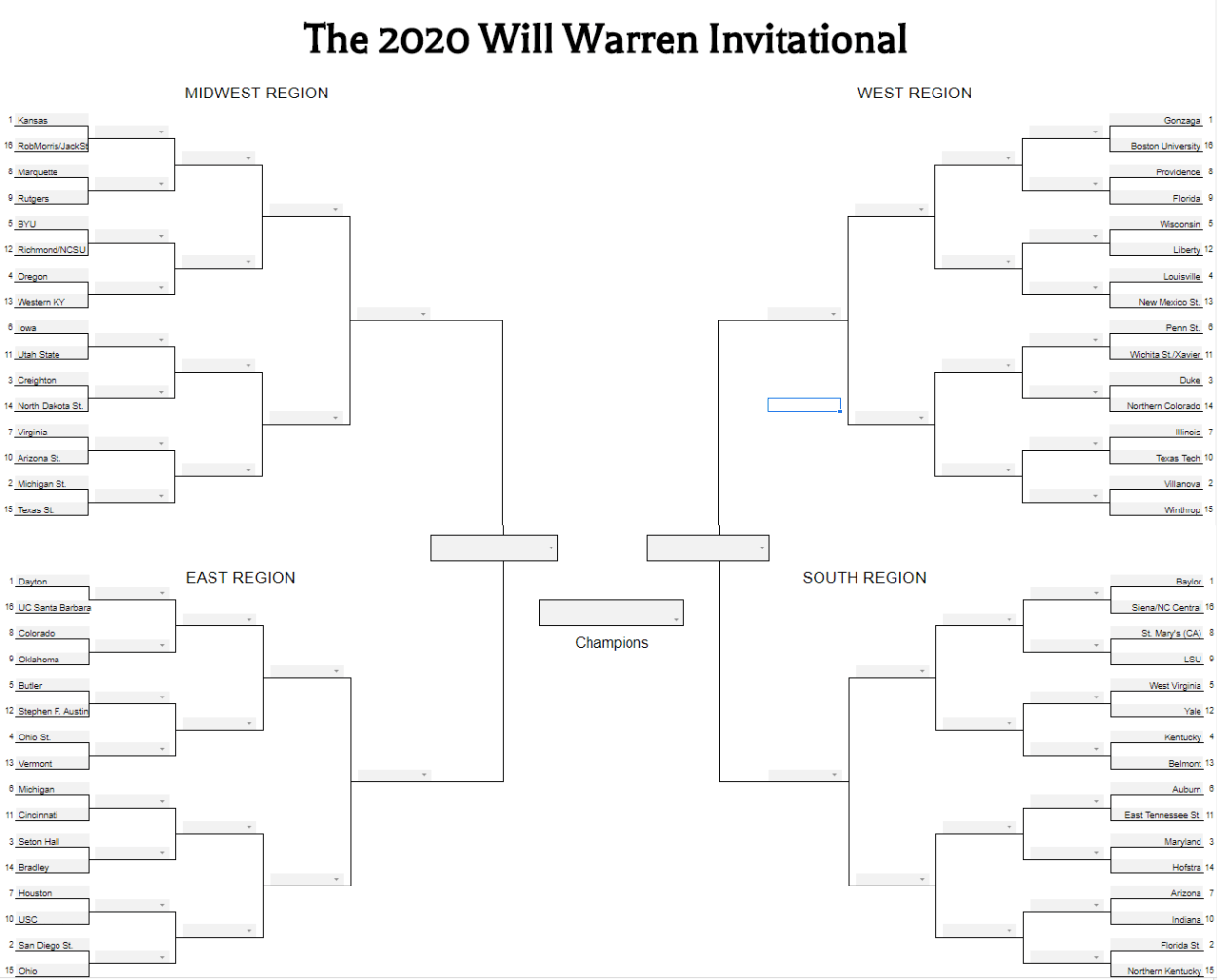
The 2020 Will Warren Invitational Field of 68

  • 1 seeds: Kansas, Gonzaga, Baylor, Dayton
  • 2 seeds: San Diego State, Florida State, Villanova, Michigan State
  • 3 seeds: Creighton, Duke, Maryland, Seton Hall
  • 4 seeds: Oregon, Kentucky, Louisville, Ohio State
  • 5 seeds: Wisconsin, Butler, BYU, West Virginia
  • 6 seeds: Michigan, Auburn, Penn State, Iowa
  • 7 seeds: Virginia, Illinois, Arizona, Houston
  • 8 seeds: Colorado, St. Mary’s (CA), Providence, Marquette
  • 9 seeds: Rutgers, LSU, Florida, Oklahoma
  • 10 seeds: USC, Texas Tech, Indiana, Arizona State
  • 11 seeds: Utah State, Wichita State/Xavier, Cincinnati, East Tennessee State
  • 12 seeds: Richmond/NC State, Yale, Stephen F. Austin, Liberty
  • 13 seeds: Vermont, New Mexico State, Belmont, Western Kentucky*
  • 14 seeds: Bradley*, Hofstra, Northern Colorado*, North Dakota State*
  • 15 seeds: Texas State*, Winthrop*, Northern Kentucky*, Ohio*
  • 16 seeds: UC Santa Barbara*, Boston University*, Siena/North Carolina Central, Robert Morris/Jackson State*

First four out: Stanford, Texas, UCLA, Mississippi State
Next four out: Northern Iowa, Purdue, Arkansas, Oklahoma State

A quick Q&A session, based on questions I would imagine people asking:

  • Why is Baylor the third overall seed? By Kansas winning the Big 12 Tournament here, we’re assuming Baylor now has four losses on the season, which, in my mind, would elevate Gonzaga to the second overall seed. I don’t know, dude, I just did it because I felt like it.
  • Explain Creighton and Duke as 3 seeds. Creighton was white hot down the stretch of the season; Duke was not, but they are named Duke, so we all rightfully expect them to win the ACC. Again, in our simulation, Florida State won it, so a 3 seed feels accurate. Meanwhile, Creighton did win the Big East in this simulation, but Villanova ranked ahead of them. Why? 1. Ask someone who does this for a living I really don’t know. 2. It actually isn’t that absurd; by Wins Above Bubble, Villanova ranks 7th and Creighton 9th.
  • Kentucky as a 4??? Hater! Correct! I do not like Kentucky. Anyway, this is a team that didn’t crack the KenPom top 20 after January and closed the season 12th in WAB. I’m gonna guess that the teams in actual good conferences would’ve gotten the nod ahead of them. Everyone really undersold how awful it was to watch SEC basketball this season.
  • Explain the Last Four In. Again, not God, but a very white guy who’s drinking coffee out of a Charleston Rainbow Row cup as I type. Anyway:
    • Wichita State ranked 31st in WAB, had good metrics across Torvik and KenPom, and, in our simulation, wins at least one AAC Tournament game.
    • Xavier only ranked 46th, but they had no true bad losses (16-2 against Qs 2-4) and had a true marquee win: their 74-62 road victory over Seton Hall in early February.
    • Richmond: 38th in WAB, made the A10 championship game in our simulation. Xavier got the 11 seed nod only because they were in a significantly stronger conference.
    • NC State: On first run, this was Stanford, but then Stanford totally blew it to Cal in their lone Pac-12 Tournament game…which pushed NCSU just over the edge. They ranked almost exactly the same in metrics averages, but NCSU had a slightly better WAB with one additional Q1&Q2 win. I don’t like either team, to be honest.
  • Explain those who got left out. Just discussed Stanford. UCLA had a worse WAB than any of the four who got in and farted around for half the season. Texas did have a good-enough WAB at 39th but left an awful impression on the committee with a Big 12 quarterfinals loss to Texas Tech, another bubble team. Mississippi State lost to Florida in the SEC quarterfinals and had a worse WAB than the four who got in. The only team in Next Four Out that had a realistic case to me was Northern Iowa, who ranked 41st in WAB, but I simply couldn’t imagine a committee rewarding a blowout MVC quarters loss to Drake with even a First Four Out nod, sadly.

Okay! That’s a lot of words! You came here for a bracket.

The Will Warren 2020 Invitational Bracket

right-click and hit Open in New Tab to see this image made in Microsoft Paint

if you’d like to jump somewhere specific, click below please:

NEXT PAGE: Bracket breakdowns

Show Me My Opponent: Alabama (#2)

Written Tuesday evening:

SEC Tournament season, baby! Are you feeling the fire? Are you feeling the excitement? Do you know that It Just Means More™? With zero teams in KenPom’s top 25 and about four teams you can confidently say are making the NCAA Tournament, I can’t imagine not being full-throated ecstatic over the re-arrival of this thing. SEC basketball is here! 4.5 whole days of it! Man, I’m almost tearing up at the thought of the classics to come. Get ready, y’all.

In all seriousness, I’ve talked about this for a while, but this is the worst SEC in at least seven years and possibly further back. The best team in the pack is pretty clearly Kentucky, a team almost perfectly suited for the 1994 NCAA Tournament, and the teams behind it are all varying shades of gray. 2 seed Auburn spent the first three months of the season exhausting its entire supply of luck before crash-landing over the final three weeks. (Still beat Tennessee twice, of course.) 3 seed LSU had the best offense in conference play and paired it with the 12th-best defense. Mississippi State, South Carolina, Florida, Texas A&M…other than Florida, who amazingly will be in the Field of 68, will you remember anything these teams did in a week?
Anyway, that leads us to our 8 and 9 seeds: Tennessee and Alabama. They’ve already played once, with Tennessee completing a wild and objectively very funny double-digit road comeback to beat the Tide. This Tennessee team is young and hyper-flawed, and yet they’re capable of that. Alabama, likewise, is a very young team that can be as fun as anyone in America some nights, yet simply opted to not participate in the NCAA Tournament after it arrived on the horizon as a serious possibility in late January.

One season is going to end earlier than the fanbase involved would have hoped or really imagined two months back. The other season will be extended until at least Friday, where the most likely outcome is a defeat at the hands of a team that hasn’t cracked the KenPom top 20 in nearly two months. Next year will be quite a bit better for both schools.

Written Thursday morning:

Are we sure we should be playing this game?

NEXT PAGE: Wash your hands

This one stat will, in fact, not change your life

Chances are, during Championship Week, you’ll be hearing the following statistic left and right:

“Every champion other than 2014 Connecticut in the KenPom era has ranked in the top 20 of offensive and defensive efficiency.”

On its face, this is a correct stat. If you were to click on kenpom.com right now, you would see that 17 of the last 18 champions, minus 2014 UConn, did indeed rank in the top 20 of both categories. I’ll even ignore Dan Dakich saying during the Green Bay/Northern Kentucky game that every champion has ranked in the top 20 of both; he is 94.4% accurate, at least, under this definition.

However: we have a clear issue that seemingly no one at ESPN, CBS, or the variety of networks that broadcast college basketball seem to be discussing. The KenPom rankings referenced are end-of-season rankings, not pre-tournament rankings. So, yeah, no wonder every champion ended up in the top 20! Here’s the actual pre-tournament rankings for every champion in the KenPom era.

  • 2002: Maryland – 5th AdjO, 11th AdjD, 3rd overall
  • 2003: Syracuse – 16th AdjO, 33rd AdjD, 20th overall
  • 2004: Connecticut – 14th AdjO, 7th AdjD, 5th overall
  • 2005: North Carolina – 4th AdjO, 6th AdjD, 2nd overall
  • 2006: Florida – 14th AdjO, 18th AdjD, 6th overall
  • 2007: Florida – 1st AdjO, 14th AdjD, 2nd overall
  • 2008: Kansas – 1st AdjO, 3rd AdjD, 1st overall
  • 2009: North Carolina – 1st AdjO, 39th AdjD, 3rd overall
  • 2010: Duke – 4th AdjO, 5th AdjD, 2nd overall
  • 2011: Connecticut – 22nd AdjO, 25th AdjD, 16th overall
  • 2012: Kentucky – 2nd AdjO, 6th AdjD, 1st overall
  • 2013: Louisville – 17th AdjO, 1st AdjD, 2nd overall
  • 2014: Connecticut – 58th AdjO, 12th AdjD, 25th overall
  • 2015: Duke – 3rd AdjO, 37th AdjD, 6th overall
  • 2016: Villanova – 15th AdjO, 7th AdjD, 5th overall
  • 2017: North Carolina – 4th AdjO, 25th AdjD, 3rd overall
  • 2018: Villanova – 1st AdjO, 23rd AdjD, 2nd overall
  • 2019: Virginia – 2nd AdjO, 5th AdjD, 1st overall

So, in fact, only 11 of the 18 champions in the KenPom era – barely over half – offered both a top 20 offense and top 20 defense. Generally, the side of the ball that’s been lacking is defense; other than 2003 Syracuse and the two Connecticuts, the other four teams with sub-20 defenses all entered with offenses ranked 4th or higher. Even 2014 Connecticut and 2003 Syracuse did at least have one side of the ball in the top 20, with UConn having one of the strongest defenses in the field.

This particular talking point has irked me for some time. In an era where four of the last six champions didn’t have top 20 units on both sides of the ball, it seems extremely silly to keep promoting this to viewers and giving them the wrong idea. Is it better for a team to be well-rounded on both sides of the ball? Obviously, yes. But it’s not the thing that decides a champion.

Here are several other statistics, all of which are actually true and are more accurate than the one ESPN is using, that I would suggest broadcasters and college basketball tastemakers use.

  • In the KenPom era, 15 of 18 champions ranked in the top six nationally prior to the Tournament beginning.
  • Seven of the last eight champions have had at least one side of the ball rank in the top seven nationally.
  • 17 of the 18 champions in the KenPom era, other than 2014 Connecticut, had both a top 40 offensive and defensive efficiency.
  • The #1 overall KenPom team has won the Tournament only three times in 18 years.

Are we good? We’re good. Let’s keep this from happening all March long.

Show Me My Opponent: Auburn (#2)

Here we are: after four-plus months of hot basketball action, we have finally arrived at the very end. Here is how I thought it would go:

And here is how all of those ended up going:

  • Record prediction: most likely 18-13, 10-8 SEC play
  • Team MVP: All-SEC John Fulkerson
  • NCAAT? check back next Sunday
  • Record vs. Florida/Kentucky: 2-1!
  • Pick 2 Click: I think we have to go Fulk here, yeah? Maybe Yves Pons?
  • Most Important Non-SEC Game: It actually ended up being the home Memphis game, but not for the reasons anyone expected. This is now a Quadrant 2 loss because Memphis has politely decided to suck in the 2020 half of 2019-20. The most important win is…probably still Washington? Somehow? Either that or VCU.

So those projections ended up going about 2.5 for 6, I’ll say. We’ll monitor the ones still in play. It’s quite amazing that we’re here even wanting to look at preseason projections, honestly. Seven days ago, when I posted the preview of the Florida game, I included the Press F to Pay Respects meme as the featured image on the article. (I legitimately cannot thank the boomer that asked me “what exactly am I looking at? Do I have to press F to access the article?” You brought so much joy to my Friday.) I, along with most others, figured the season was basically over. This team might beat Florida, it might beat a rapidly declining star in Auburn, but it wasn’t going to win at Rupp.
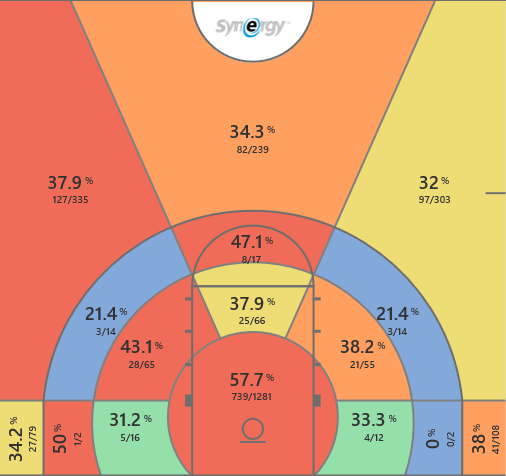
Until it did.

Now, here we are, entertain us, these Tennessee Volunteers can get themselves back onto the NCAA bubble – not even the NIT one, y’all – with a win over an Auburn team that was 22-2 three weeks ago. What a world.

NEXT PAGE: I can’t link it because my grandparents read these but I very nearly made the @dril “Holy Mackerel” tweet the featured image.